The following story was among the papers sent to my by my cousin-in-law in Freetown, IN, Phyllis Loper.
After a most pleasant reunion of the SMITH-WHEELER families at Freetown on Sunday, Jul 27, at which it was stated during the program given in the afternoon, that the president J.[ames] B.[laine] Smith in company with Robert Smith would take a day off in which a search would be made to locate the burial place of some of our ancestors, particularly that of Isaac (?) Smith, great-grandfather of the two undertaking the search.
The search embraced cemeteries in two counties, and an interview with Mr. Levi Bridgewaters at his residence in Bartholomew county. The trip was made on July 29, 1941.
It was a warm day, and we found Mr. Bridgewaters, a hale old gentleman of seventy-eight years, sitting on the front porch of his residence in old Mt. Healthy. When in conversation with him we complimented him on his apparent health of mind and body, he commented that it was a simple matter with him as had access to “The Fountain of Youth” – in fact was the owner of it. When we expressed an interest in this heretofore mythical fountain, he led us a short distance to the foot of the hill on the road to Columbus where was a cement house in which was a pump that yielded an excellent mineral water of which we drank freely.
Mr. Bridgewaters is an affable gentleman, free to answer our questions, and to volunteer information concerning our family, some of which surprised us very much as it was not known before. Mr. B was speaking from the vantage point of being the grandson of Joseph Bridgewaters, the second husband [of] great-grandmother Smith whose first husband was our great-grandfather, whose name [was] supposed to be “Isaac” Smith. To establish the certainty that “Isaac” was his christian name was one of the objects of our search.
In answer to the first question[1], he stated that the maiden name of our great-grandmother was Nancy White. He then volunteered the statement that she had a sister “Ibby” White, who married James White. (When asked whether this was “Kentucky Jim” of whom I had heard my father, James W. Smith speak, he was unable to say.) One of the sons born to Ibby and James White, he stated, was Coleman White; that this Coleman White married Mary (Polly) Smith, his cousin[2]. He stated that Great-Grandmother Smith-Bridgewaters was buried in a burying ground at Buffalo, Brown Co. which statement proved to be erroneous[3]. He stated that one of her sons, Isaac Smith[4], was killed in the Civil War; that Belle (White) Smith [5], his widow, married one Sam Kline[6]. (I have spelled the name phonetically: it may be [spelled] quite differently.) He also stated that our great-uncle, Thomas Smith, married in Brown County, a daughter of William Holmes[7]. Another statement was that Joseph Marion Smith, who was a son of Great-Uncle William Smith[8], married a Miss Romine, daughter of Steve Romine. He said, “I lived for a time in J. Marion Smith’s home near Arcola, Ill., and near Tuscola, Ill.”
[1] a written note on the document I have says “This is where the “White” get started, alluding to the incorrectly dispersed name of Nancy Hendricks Smith Bridgewater[s]. [2] I believe the kinship is via the Coonrod Hendricks m. Julia Ann Rice family. Need to prove it out. [3] In hindsight, Mr. Levi Bridgewaters was spot on. I will omit the details why until the end of the story. [4] Isaac Smith “Jr.” died after 1863. [5] Isabell White married Isaac Smith “Jr.” 9 Oct 1858. [6] Per her obit, a daughter of “Mrs. Isabell Cline” married John Goley. Her son James T. Smith lived in Sanford, IL. [7] Thomas J. Smith married Catherine Holmes. Thomas Smith and Thomas Hill were among the first Smiths to migrate to southern Illinois. [8] I’m not sure who this was. William B. Smith, brother to James W. and Isaac S. Smith, married Sarah Adaline Spurgeon. Samuel R. Smith did have a brother William, however. He married an Elizabeth White 20 Jun 1830 in Lawrence Co, IN. I’m not sure what family is being discussed here.
The statement by Mr. Bridgewater that both surprised and enchanted us was that Isaac and Nancy Smith had a daughter named Elizabeth, who became the child wife of Frederick Waggoner; that Elizabeth died at the age of seventeen, leaving a daughter, Judy Ann, who married Isaac Jones. Neither Cousin Jim [9] nor I had known that we possessed this great aunt and this cousin (cousin, once removed).
[9] James B. Smith, son of Isaac S. Smith, son of Samuel R. Smith
When in almost midafternoon, we had thanked Mr. Bridgewaters for his courtesy and bidden him good-bye, Cousin James drove to the Christianburg Cemetery, the cemetery in which he had expressed himself as being most confident great-grandfather’s grave would be found, if found at all. But a careful search did not reveal it. In this cemetery, however, we viewed a rather large monument marked: -Daniel Webseter Berry – 1859 – 1921; Sarah Adaline Berry – 1860 – 1925. (Also we noted one: Amos W. Carmichael – 1832 – 1907. and Peter Greathouse – 1837 – 1906). From here we drove to Buffalo Cemetery, a cemetery overgrown with weeds and briers. Here we noted a gravestone: -Mary, wife of W.B. Holmes, Died Mch, 1, 1852, age 38 years. Also in the graveyard was a tombstone, Marked, Martha A. Holmes, Died 1832.
In rather drooping spirits, we drove to the Urmy (?) cemetery, or Lutes Cemetery as it is not generally called, which we regarded as a forlorn hope.
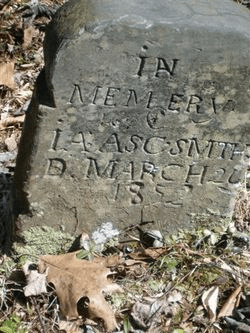
But the “hope that springs eternal,” urged us on. We had entered this somewhat unkempt “city of the dead,” from the west, and had gone only a few paces into it, when Cousin Jim, stooping low before a native sandstone grave marker, called me. With pencil and note-book in hand, I was soon stooping with him, my gaze directed with his through the parted weeds before the stone. There, legibly scratched on the stone were the words: –
IN MEMERY OF IAASC SMITH DIED 1852.
I believe I have the original photo Robert took, but it is too delicate to scan.
The crude lettering and the evidence illiteracy of the one whose hand had traced the record [did not disturb the] but expressed my incredulity in the words: “Maybe this is not the grave of our ancestor after all; there are so many Smiths.” But Cousin Jim did not manifest any doubts; he was exultant; and my skepticism was joyously dispelled when on a near-by stone – a marble slab – the product of one adept in such work – we read:-
NANCY Wife of ISAAC SMITH and of JOSEPH BRIDGEWATERS Died Dec. 10, 1876, Aged 82 years, 11 mos., 13 da.
And in confirmation of what Mr. Bridgewaters had told us, we read on another tombstone: –
ELIZABETH Consort of FREDERIC WAGGONER Who died Dec. 24, 1845 In her 17th Year.
A little farther away was a rather neat stone marked: –
JUDY ANN JONES Daughter of F&E WAGGONER [Frederic and Elizabeth] Born 1845 – Died 1868 Aged 23 years.
Near Judy Ann’s grave was Isaac Jones’s grave with a stone marked: –
ISAAC JONES Born June 15, 1832 Died Dec.12, 1895.
The story of Elizabeth Smith Waggoner as told by Mr. Bridgewaters concerning Elizabeth Smith Waggoner, and her daughter, Judy Ann, was corroborated by Mrs. Lafe McKain, who being a half-sister of Judy Ann, could dwell upon and enlarge the story. She related that Judy Ann’s marriage to Mr. Jones was an unhappy union that resulted in her death at the age of twenty-three; that afterwards Jones married Miss Mahala Miller.
The following day, July 30, Cousin James and I made another trip to the Lutes Cemetery, this time having a camera with which [I] took some snapshots in the cemetery. On this visit, we noted a stone that was marked: –
Elizabeth Smith wife of William Smith Born June 30, 1808 Died Jan. 14, 1846
And another marble slab that had falled down was marked: –
Directly after my arrival at Freetown, a few days before the Smith-Wheeler Family Reunion, on July 27, I heard the story that “Little Jim”, as he was familiarly spoken of to distinguish him from another “James” in the family, had met death by his own hand, more than a decade ago at his place of residence in Illinois. Mrs. Cora George, widow of Cousin A. Jeff. George, told the story as told to her by a Mrs. Greathouse who lives on the creed on State Route 135, south of the White Schoolhouse. As Cousin Jim and I were on our return home from the trip to the cemeteries on July 29, 1941, we stopped at the Greathouse home, to find Mrs. [?] at the back of the house with a milk pail in her hand, it being evening chore time. When interrogated about the story, she repeated the story as Mrs. George had related it, which was that “Little Jim” lived near them in the country near Stanford, Ill., and that the community was stirred by the tragedy of his killing his wife while she slept and then killing himself. I think she said a revolver was used. He left a note, Mrs. G said, explaining that he killed his wife because he did not wish her ever to be in want. This was about the year 1932 Mrs. G. thought; and she also said that “Little Jim” had come there from Warren County, Ind.
Not only the foregoing story, but much more of what I learned was a revelation to me and there is much more to be revealed. Even those from whom we sought information, who kindly gave us much, can no doubt give more. The mind becomes pregnant with interrogations. Where was Isaac Smith, our oldest known ancestor born and his sire? Someone told me many years ago that the Smiths were immigrants from the South. I shall not cease diligently to search for historical facts regarding out Smith ancestors. It may be that a professional in tracing genealogies might now be profitably employed, if that be within our means. As long as I live, I shall not be satisfied with the meager knowledge we have of the origin of our branch of the Smiths. It freezes one’s soul to think of the record as forever sealed.
As we stood beside the graves of our people, in the silence of those eternal Salt Creek hills, we thought of the lines of the immortal Elegy in a Country Graveyard –
Oft did the harvest to their sickle yield. Their furrow oft the stubborn glebe has broke; How jocund did they drive their teams afield; How bowed the woods beneath their sturdy stroke;
And looking on the crude but venerated stone at Grandfather’s grave, this from the same elegy, came, –
Their name, their years, spelt by th’ unlettered Muse, The place of fame and elegy supply: And many a holy text around she strews, That teach the rustic moralist to die.
When again the Smith-Wheeler Reunion is held back in the homeland – the 1942 meeting being planned for Cami, Ill. – Cousin Jim and I have in mind as part of the program , a Pilgrimage, – a motorcade – to the Lutes Cemetery where is the grave of our oldest Smith ancestor and a number of our other relatives.
– By R. M. Smith
P.S. I am enclosing a snapshot of Grandfather’s gravestone and one- Elizabeth Smith Waggoner’s – R. M. S.
P.S. 2nd . Uncle Hiram, you may find some glaring lack of knowledge of the family in this account, but it was a great satisfaction to me to get my mind straightened out on some things, that may seem simply to you. As Mrs. L. McKain said, “I knew where those graves were, and about most of what you have learned, all this time”, may be so with you. But I had not known them. Jim, however, was of the opinion Mrs. McKain knew only “after he had told her.” If there is anything you would like to add in the way of information I would be glad to have it. I mean to go ahead till I know all that I can learn about the family and complete the genealogy if possible. -R.
This post may strike a dissonant chord with the companies and groups that I am going to mention, but I feel that the state of the volunteer yDNA research projects, as handled by FamilyTreeDNA, has gotten out of hand. The issues do not stem from the surname project admins (though I have found one to be of specific concern), but rather the information provided by the yDNA testers who join the projects.
Further, it is not all of the participants who are the issue, only those who make unsubstantiated claims of having identified yDNA that originates from a person from very far back in history that gave rise to large populations.
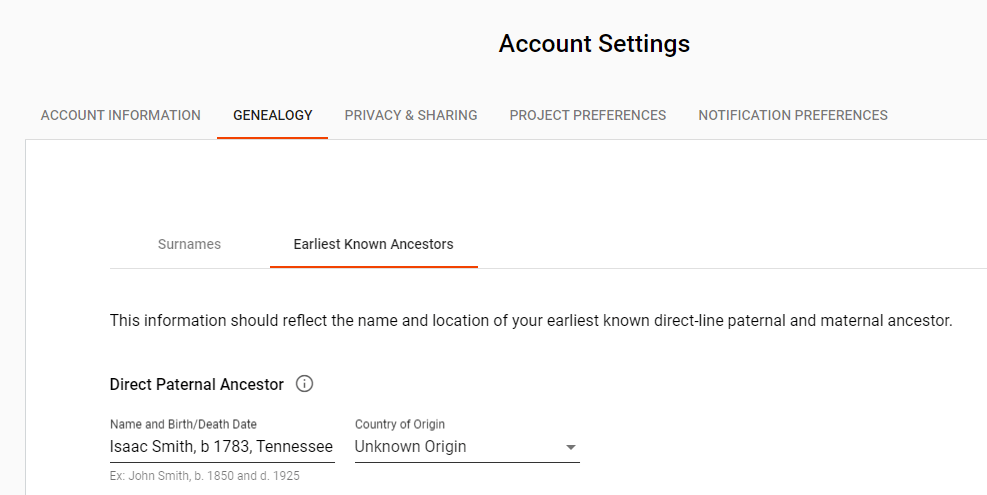
When one takes a yDNA test at FamilyTreeDNA, an option is provided to document your earliest documented ancestor on your male line:
I should probably update this with old Robert Smith of St. Matthew’s Parish
Here we see that, if so desired, anyone can enter anything in these fields.
Motivation to make this post partly came from the recent discovery of kit “364732”.
They appear to make a claim of being descended from the “Butlers of Ormond”. On their part, I know this is not a true statement.
a cropped screenshot of their published information
It should be very obvious the damage a situation like this can do to the genetic genealogical research efforts.
From what I know about the story behind “364732”, they do not have any paper records to support their claim of descent from the “Butlers of Ormond”. They have also demonstrated a lack of solid understanding of yDNA inheritance.
An inquiry into the Butler Surname Project at FamilyTreeDNA resulted in me being told that the kit manager was advised to reach out to me directly to resolve this matter. While, by proxy, I have provided them my name, e-mail address, and links to my blog and WikiTree project, I have yet to hear from them or see that their information has been corrected.
The core of this problem arises from how the volunteer projects are populated with information. NPEs aside, anyone can make a claim of descent from any family and simply affix their yDNA to that claim, sans proof. Some projects do provide forums within which discussions can be had to further explore topics among group members, but that is not a standard, nor is engaging in discussion about one’s ancestry required if mentioned.
We now see how the system is flawed. Anyone can make a claim about their yDNA, and that claim can be widely published, all without supporting evidence. Essentially, anyone who takes a yDNA test can now attempt to misappropriate the story of the genetic origins of larger male populations. This can end up affecting the research of many families.
A simple fix for this could be to enforce data formatting constraints for the “Direct Paternal Ancestor” field in the FTDNA User Profile to limit values to a first, middle and last name with vital info in separate fields. As of now, it appears FTDNA simply accepts a generic string.
In inspecting SmithsWorldWide.org, we see this matter become even more complex. I have found about 7 or 8 groups who, when the claims of historical relevance of their yDNA to larger populations is examined, are found to be in conflict with each other. I will not go into those details here, but I can detail for you how peer review and challenges to published claims on their site are handled.
SmithsWorldWide.org provides a place where yDNA test takers, after already being matched to their cousins at FamilyTreeDNA, can begin archiving and organizing their Smith family research for their larger yDNA matched population. The main issues stem from how those groups are created and managed in the long-term.
The scenario I see happen frequently is that, in the early days of yDNA testing at FTDNA, some earnestly interested and knowledgeable family researchers organized yDNA studies for their larger populations. These people, usually much older in age, were the first to act as “group contacts” for their yDNA groups. Unfortunately, over time, these original resources pass away and the task of navigating and updating the information in the various groups falls on whomever is willing to take up that mantle. However, there are situations where not every group has someone willing and/or able to assume the role that is now left unmanned with the prior family researchers’ passing. Further, not everyone who is able to simply click on the “Join” button of the surname project is willing to learn how to work with the SmithsWorldWide.org application.
This can lead to a number of things happening. There can be data stagnation (nothing new is learned about the groups), there can be inability to correct bad information (the site admins refuse to examine trees, sources, and analyses for accuracy or get involved in challenges), and broader claims of understanding the ancestral origins of the yDNA lines may be incorrectly posted and unable to be challenged. To compound things, SmithsWorldWide.org does not require autosomal analyses to show two people were related, but they do allow atDNA kits, without analysis, to join the various groups. I have at least one case where a person related to my Smith group was added to an incorrect group. This is quite likely happening in other groups as well. How would you feel if you were told a group of people were related to you when, in fact, they were completely unrelated?
The main way group research is effectively coordinated on SmithsWorldWide.org is there are usually one or two group researchers who field all communication about their group’s story and information. Unfortunately, due to the aforementioned issue of “anyone can claim anything about their yDNA without proof”, we are left with the functional design of relying on trusting the yDNA group members and contacts/researchers (different from the surname project admins) to be capable of doing the necessary research, it being of sufficient quality, and to be working in good faith.
Effectively, if one were to challenge a yDNA group’s published claim at SmithsWorldWide.org, if the group contacts do not agree with you, even if you correct and have proof, they are under no obligation to correct their group’s errant published information.
With sites like SmithsWorldWide.org, while they are not a member as far as I am aware, the issue with “364732” is exacerbated. We now have a situation where, if challenged, even with evidence, unless the group contacts concede, corrected information will not make it’s way into their application. We should keep in mind that DNA testing can be used to test the validity of books and other sources.
SmithsWorldWide.org is largely viewed as a semi-authoritative source for the historical context of yDNA information. I have had other researchers cite their pages, which were in those instances incorrect, when discussing topics relevant to my research.
So what do we do then? We now approach a larger online system that suffers from, though likely not wide-spread, an effective removal of all checks, qualifications, and challenges on what information is attached to yDNA results, and relies solely, in some cases, on the good faith of yDNA test takers to populate their earliest direct paternal ancestor accurately and honestly in their FamilyTreeDNA profile and on family researchers to act in good faith.
A few years ago, a cousin-in-law of mine from Freetown, Jackson Co, IN kindly sent me via postal mail a packet of really remarkable Smith material.
My cousin-in-law is the widow of a descendant of Isaac Stalker Smith, an elder brother to my 2x-great-grandfather, Daniel Robert Smith (we previously believed his middle name was Rice).
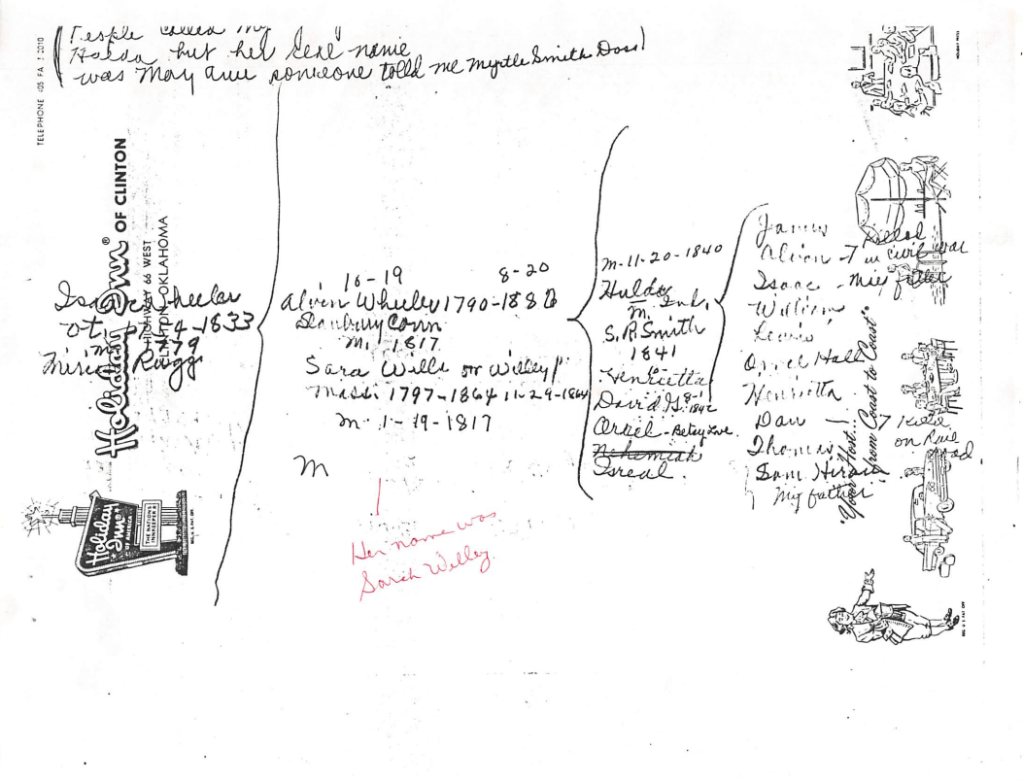
Among the fantastic items she gave me was an interesting family tree of Samuel Rice Smith and Hulda Wheeler, daughter of Alvin Wheeler and Sarah Willey.
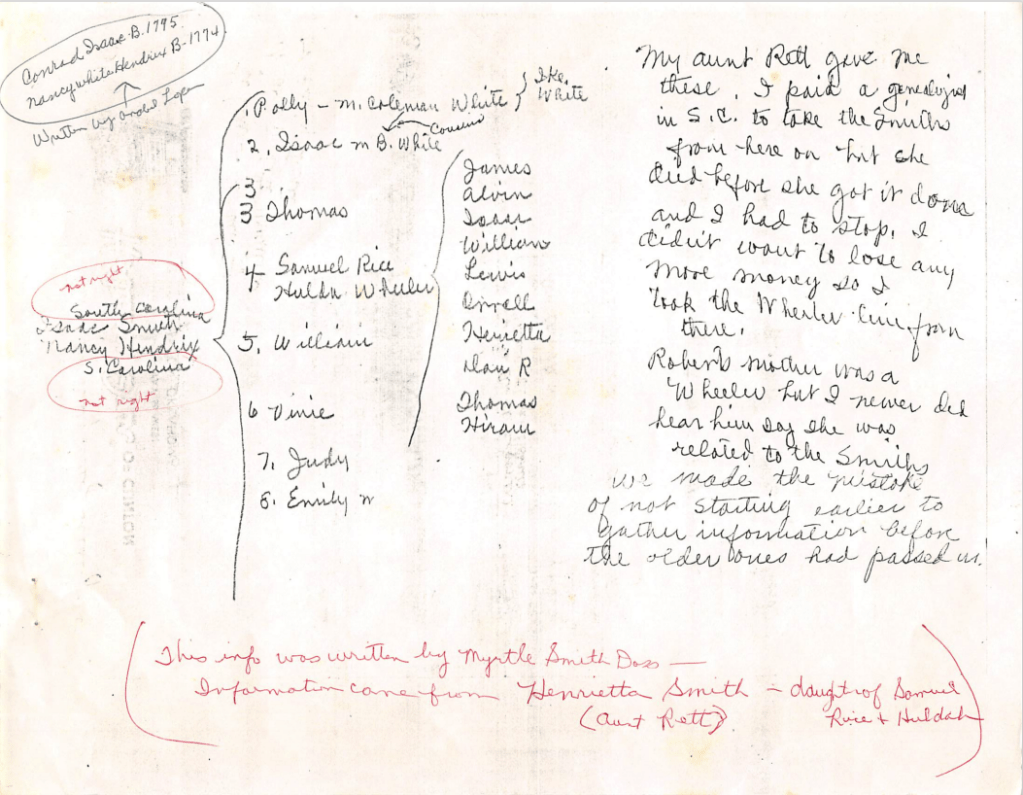
-Begin Transcription-
(top left)
Conrad Isaac B. 1775 Nancy White Hendrix B. 1774 (written by Anabel Loper)
My aunt Rett gave me these. I paid a genealogist in S.C. to take the Smiths from here on but she died before she got it done and I had to stop. I didn’t want to lose any more money so I took the Wheeler line from there.
Robert’s mother was a Wheeler but I never did hear him say she was related to the Smiths.
We made the mistake of not starting earlier to gather information before the older ones had passed us.
(bottom)
This info was written by Myrtle Smith Doss – Information came from Henrietta Smith (aunt Rett)- daughter of Samuel Rice + Huldah
I can not help but see similarities between what my cousins describe as a female genealogist from South Carolina who, in the 1980’s, gave errant family history information about our Smith family and the work of Linda G. Cheek, a genealogist and author from South Carolina who claimed a specialty in Smiths. She has published a book that makes provably false conclusions about large Smith populations. Her book Ancestors and Descendants of Smiths was published in 1987, right around the time the information in these notes was penned. If not for the statement that the genealogist my cousins hired is said to have passed away, thus saving them from throwing money at nothing, I might assume they had contacted Cheek, but I have no evidence of this.
A second page
-Begin Transcription-
(top, partially cut off)
(People called my (unknown) Hulda but her real name was Mary Ann someone told me Myrtle Smith Doss)
[note: this information is not correct for the parents of Alvin Wheeler]
(center) Alvin Wheeler (10-19) 1790- (8-20) 1886 Danbury Conn m. 1817 Sara Wille or Willey/ Mass. 1797 – 1864 (11-29-1864) m. 1-19-1817
(in red) Her name was Sarah Willey
(right of center)
m. 11-20-1840 Hulda m. Ind S. R. Smith 1841 10-(?) Henrietta David G. 8-1 1842 Orrel – Betsy Love Nehemiah Isreal
(far right)
James Alvin -> Killed in Civil War Isaac – [I do not know what this says] William Lewis Orrel Hall Henrietta Dan -> Killed on Rail Road. Thomas Sam Hiram My father [Myrtle Smith Doss]
-End Transcription-
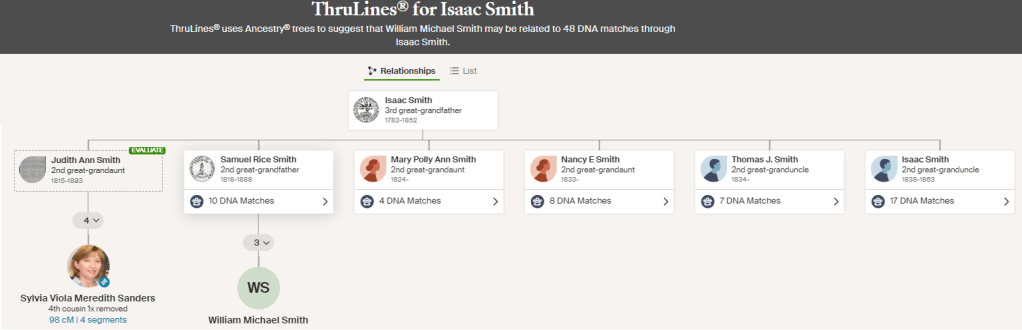
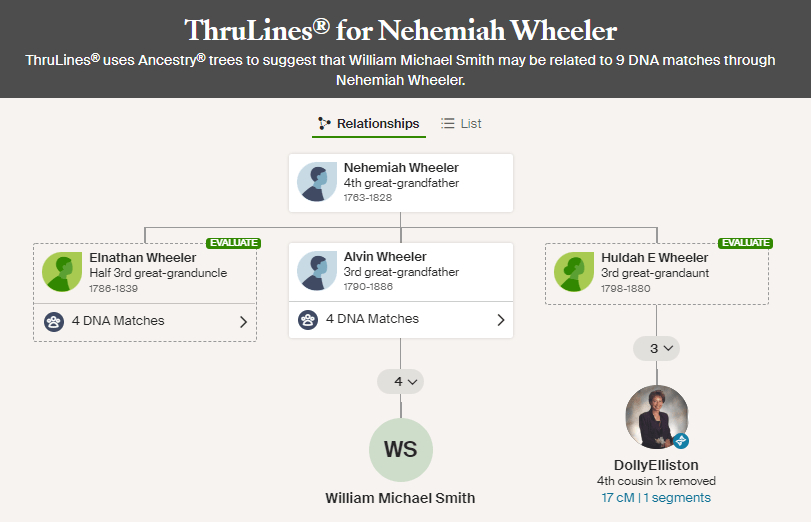
The ThruLines matching at AncestryDNA has this to say about the Isaac Smith m. Hulda Wheeler tree
There may still yet be descendants of Isaac that are not aware of his identity.
These documents, or at least the research behind the information on these documents, is undoubtedly how a number of issues with my Salt Creek population have been perpetuated online.
In my immediate family’s early days of researching, much of our effort was put into looking for “Conrad Isaac Smith”. In examining the paper trail for the man whom I refer to in my research as “Isaac Smith, Sr.”, I can find no mention of him being referred to as “Conrad Isaac Smith”. I believe also, “Nancy White Hendrix” is a misnomer.
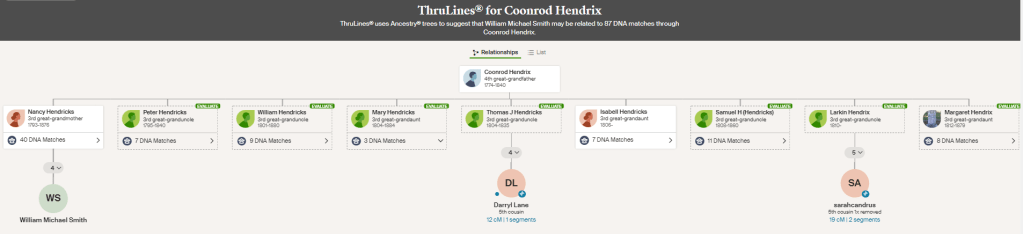
AncestryDNA ThruLines shows this:
Coonrod Hendrix married Julia Ann Rice. “Conrad” Hendrix surely has had his name intertwined with Isaac Smith, Sr.’s. Coonrod and Julia were married in Woodford Co, KY [20 Aug 1793], the same place as Nancy Hendricks and Isaac Smith, Sr. [9 Mar 1809].
Coonrod’s will can be found as the cover page of the Kentucky wills at the KY Historical Society.
Further, Nancy does not appear in records to have ever had a middle name “White”. There was a White family that was in-laws with both the Hendricks and Smith families, however.
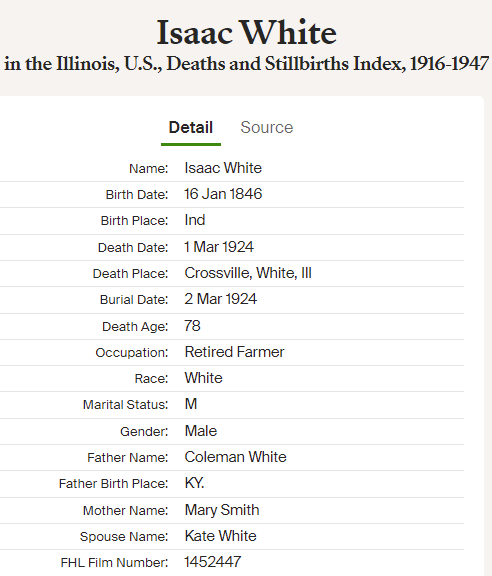
Isabell Hendricks married a James White. They moved from Estill Co, KY (where Coonrod and Julia can be found between 1820-1830) to Brownstown, Jackson Co, IN and later to Van Buren, Brown Co, IN. Further, Coonrod transacted land with a Jesse White and Polly Smith married a Coleman White. Polly and Coleman were parents of Isaac White.
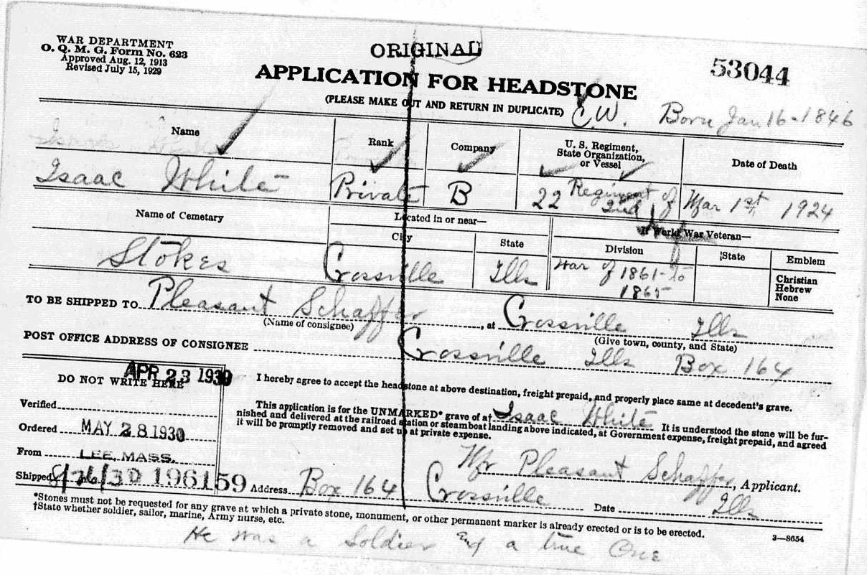
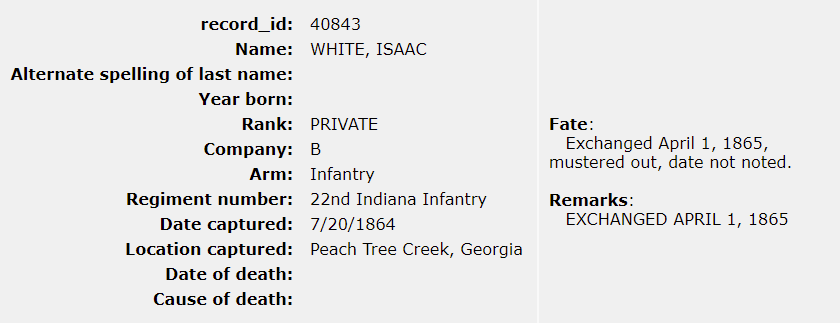
Shifting away from Coonrod and Julia for just a moment, when I was a teenager, one of our family van vacations included a stop at the Andersonville Prisoner of War camp in Georgia. My father wished to impress upon me the solemnity of the place, and to make sure I was aware that we had a relative who, at that place for nearly eight and a half months, suffered greatly. We found the name “Isaac White” inscribed on a monument and took a moment to pause. I remember seeing a crawfish in the trough of a running water feature there.
Crossville, IL, a frequent setting for many scenes in the Smith story. For Isaac White, “He was a soldier and a fine one.”From “Civil War Prisoners.com“
Isaac White is mentioned in the book “The Salt Creek colony of [Little] Egypt” by Robert Marshall Smith. This book includes Smith history up to and including my great-grandfather, Vernon Stanley Smith. Isaac White was 78 when he passed away 2 Mar 1924, having long survived the horrendous conditions of Andersonville Prison.
Returning to the item of correcting published identities, in the book, The Ruddick Family in America, Alvin Wheeler is stated to have been a son of Capt. Isaac Wheeler, and we can now prove this is not correct.
A modern inspection of Alvin’s paper trail agrees with this finding, that he was a son of old Nehemiah Wheeler.
I attribute the likely dishonest work of whomever this “genealogist” from South Carolina was to the creation of these aforementioned errors.
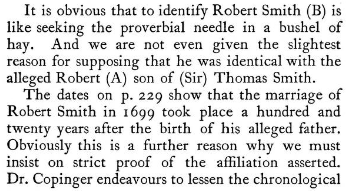
Round attempts to bear the weight of the (self-resolved) issue of the pedigree of Smiths of Boulcott Lodge on the matter of the pedigree of Richard Smith-Carington.
While the visitation records are sufficient to dis-prove any connection between the Smiths of Boulcott Lodge to the Smiths of Rivenhall, Round is unable to find any information that would either prove or disprove the pedigree of Richard Smith-Carington.
In short, Round is making a conclusion about the parentage of Robert Smith of A[l]sworth, Notts. without sufficient evidence. Further, William George Dimock Fletcher does claim, with details, to have sources for Robert Smith’s family connections to the Smiths of Ashby Folville. Round dismissed these sources. I will not disagree it is difficult to prove, if even suggest, the two Robert Smiths were the same person, however. [Later comments by David J. Lewis do cast strong doubt on the even more ‘recent’ ancestry of Mr. Smith-Carington]
Further, Round places an invalid amount of weight on the fact that Sir John Smith, Baron to the Exchequer, used a different coat of arms than his ancestors. Per the College of Arms, the existence of a hereditary right to ancestral arms to does not prevent a man from being issued new arms that are completely different from his ancestors.
Round should not have used coats of arms to dis/prove any pedigree. [and Mr. Smith-Carington has a rightly questionable pedigree.]
My DNA based research, however, is most closely in proximity to the Smiths of Blackmore, Essex.
Recently, I came across two discussion threads [1] [2] on WikiTree that involved the topics of the Carrington alias Smith story, again, and found myself again reading the words of Andrew Lancaster who, quite readily, cites and defends the work of John Horace Round on this topic.
Unfortunately, since I engaged him and others in two different threads, the discussion is effectively split between both threads. It may be terribly difficult to follow, but I tried to make each post able to stand on it’s own merit and relevant, as much as possible, to the previously mentioned topics. These alone are worth a read if you are interested in this topic. There were even two folks who tried to completely dismiss the obvious, that is, the value of a 12 marker yDNA test for the previously un-tested male line of Hervey Walteri.
All of this out of the way, the main findings I’d like to discuss in this post pertain to 1) the information available about Robert Smith of A[l]sworth, co. Notts. and 2) the use of coats of arms in Round’s arguments.
Preface
In agreement with Round, I find no evidence to support a connection as described by Dr. Copinger [his book] that the male line of Able Smith of Boulcott Lodge and Smith Bank & Co. is in any ancestral proximity to the Smiths of Rivenhall, Cressing Temple, (Little) Baddow, Wooten Wawen, or Ashby Folville (and possibly a most recently [re]discovered Smiths of Newbuilding, Yorkshire, also of Crosby Temple, Essex, also Sutton Hall in Thirsk ; post in planning. Where the heck was Crosby Temple in Essex?) . This research on the line of Abel Smith was done using visitation records and can be reproduced by anyone willing to take the time to do the work.
(Side note: My hypothesis of the connection between the Smiths of Smithfield, VA to the Smiths of Blackmore, Essex is only challenged by Round’s attack on the John Carrington alias Smith pedigree. I am exploring the full scope of that information for my next post.)
“and nothing henceforth remains of ‘the great Carington imposture’ but Lord Carrington’s title and surname [Nottingham], and the Royal License so strangely granted to the “Smith-Carington” family in 1904 to bear the name their father had ‘assumed in accordance with a tradition in the family [Ashby Folville]’ (Cop p.373)”
“I am wrong. There remain also Dr. Copinger’s book and those arms with which Ashby Folville has been bespatterd by its possessors, from ‘the public house‘ (Cop p. 423) to the ‘communion plate’ (Cop p. 423).”
Note: These “(Cop p.xxx)” parenthetic citations are for Dr. Copinger’s book.
I will stop here for a few comments. On page 141 of Vol II of Round’s Peerage and Pedigree, he says something that makes me wonder why he even spent any time at all discussing the Able Smith of Boulcott Lodge line.
“Although the surname and the title alike are based, as I shall show, on a glaring imposture, the family appears to have now [1910?] abandoned any pretense to a descent even from the Essex Smiths, the alleged connection having been disproved, and even vehemently denounced, by Mr Augustus Smith, a descendant of the Nottingham house.”
Here we see that Round decided to include an already disproved story in his work. Why? I wonder if he simply wanted to use this story as an example upon which he could base further dismissals of other unrelated families. Is this a waning burning ember he tries to use to light the remainder of the Carrington alias Smith story ablaze? He does take a very noticeable tone when stating his conclusions.
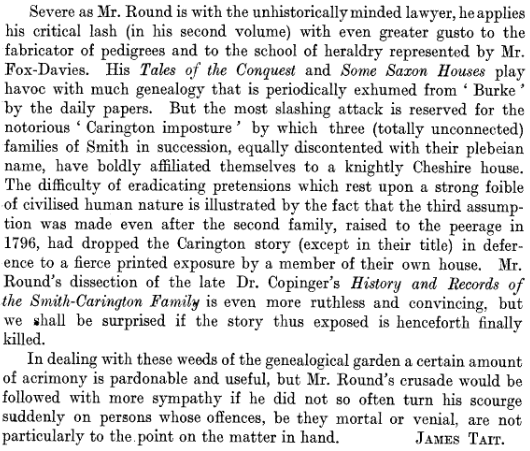
To quote James Tait (pub. Oct 1910, around the same time as Round’s Perrage and Pedigree, Vol II):
I believe the “Clare” family mentioned may be the same that is frequently mixed up with the line of Hervey Walteri, based upon the name “Robert fitzWalter”.
“It is a coincidence, and one with which genealogists are continually confronted, that in the registers of the same parish are found names identical, yet not of the same blood. Thus the registers of Plumtree, Notts, are full of the Cropwell Boteler [also Tithby] yeomen Smiths. Nevertheless, some years after their departure from the parish, a gentleman bearing their name, though really Carington, becomes a resident landowner. It was probably this fact that caused Mr. Augustus Smith to reject the Smith-Carington pedigree, assuming apparently that every Smith of Plumtree must be allied to Cropwell. Quod non constat. [Which is not agreed.]”
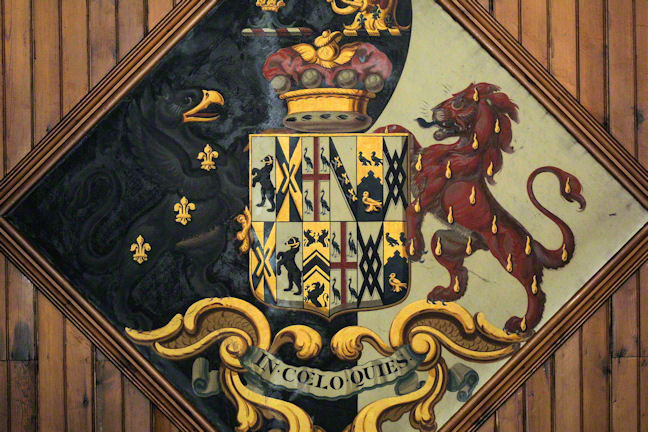
For reference, lest a visual aid even further muddle this story (descriptions at bottom of image):
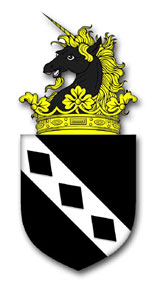
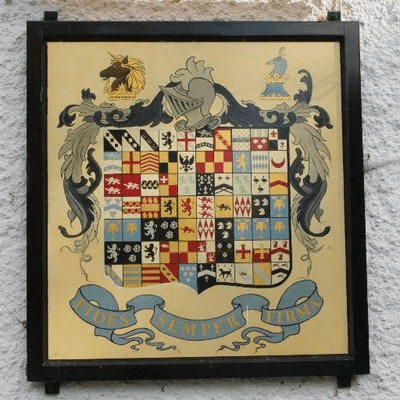
Arms of Baron Carrington(created 11 Jul 1796, line of Able Smith of Bulcott Lodge, Notts and later, the late Lord Peter Carington) We see here, in these arms, allusions to the one ancestral narrative Round can prove, as can I, to be a fabrication. I will note that even these arms, however, do not place the peacocks at the far top left corner, as is usually done with the bearer’s direct male line’s ancestry.
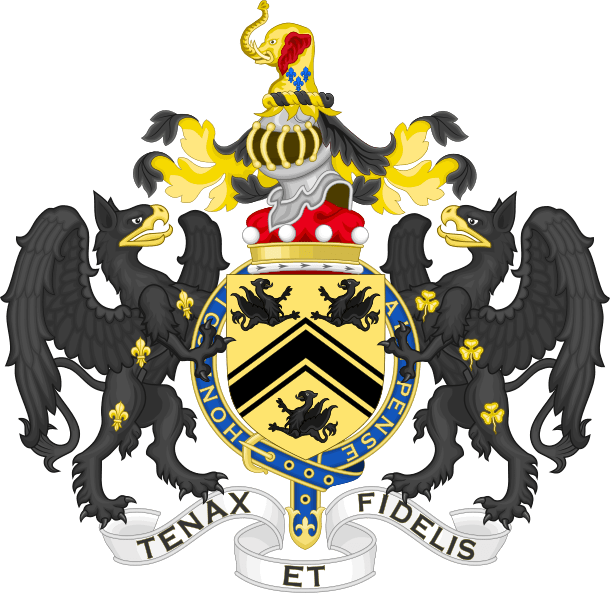
This Smith line more recently corrects their arms with this design, using solely the three griffins and chevron and elephant’s head for a crest (nothing remains at issue here):
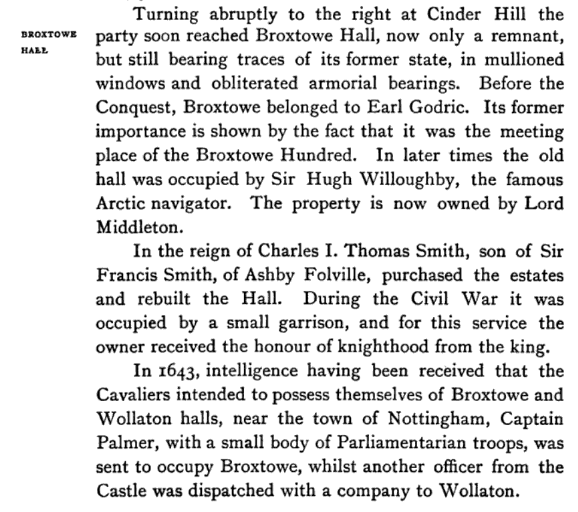
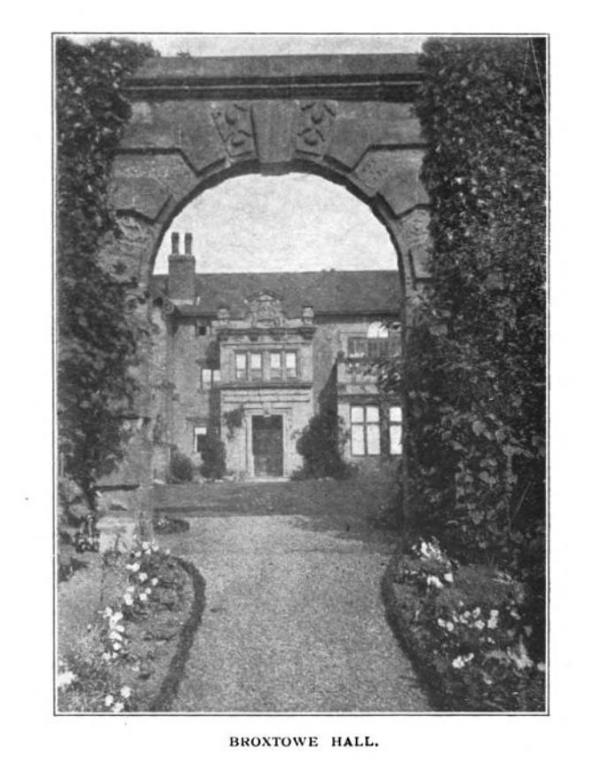
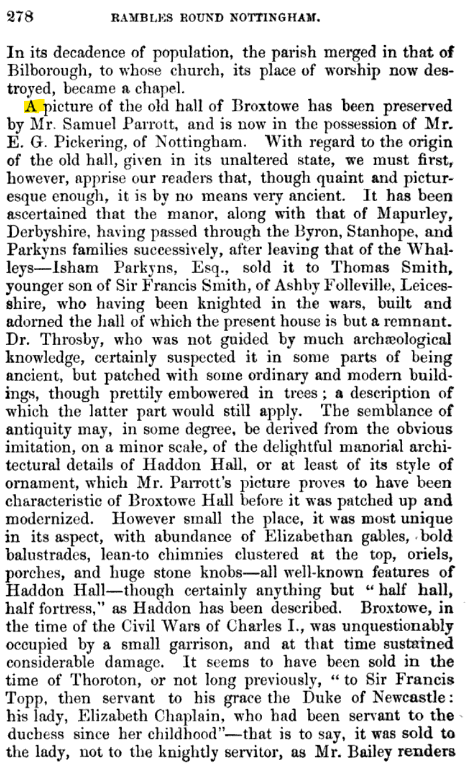
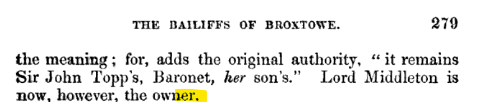
I will say that it appears that “Brad” had initially mixed up the identity of Sir Thomas Smith of Broxton Hall (m. Mary Blakiston) with Thomas Smith, a cloth mercer [2], and brother of Samuel and Abel Smith, all three being founders of Smith Bank & Co. Remember, we can prove with visitation records that Thomas Smith, mercer, was descended from the Smiths of Cropwell Boteler near Tithby, co. Notts., not the Smiths of Wooten Wawen and Ashby Folville in Leicestershire. “Brad” later goes on to say “it seems quite likely that Broxtowe & Broxton were indeed one & the same or possibly shared a common origin”.
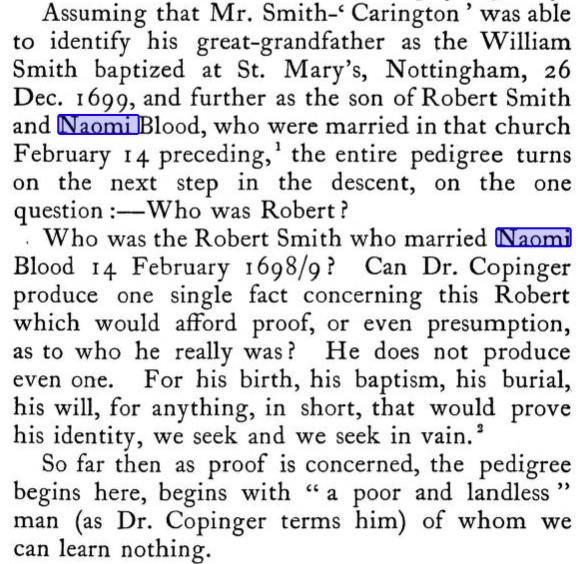
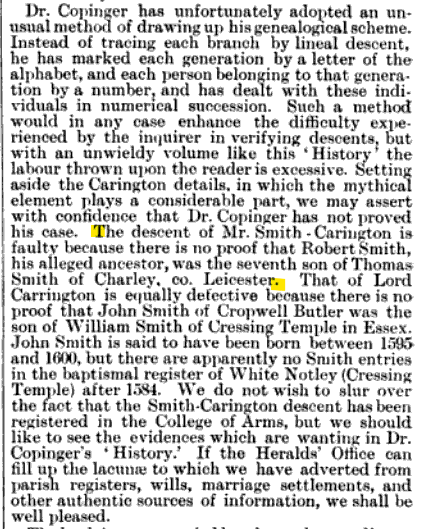
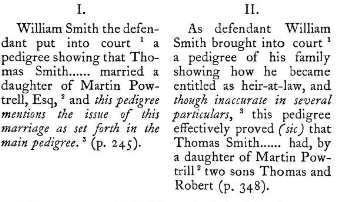
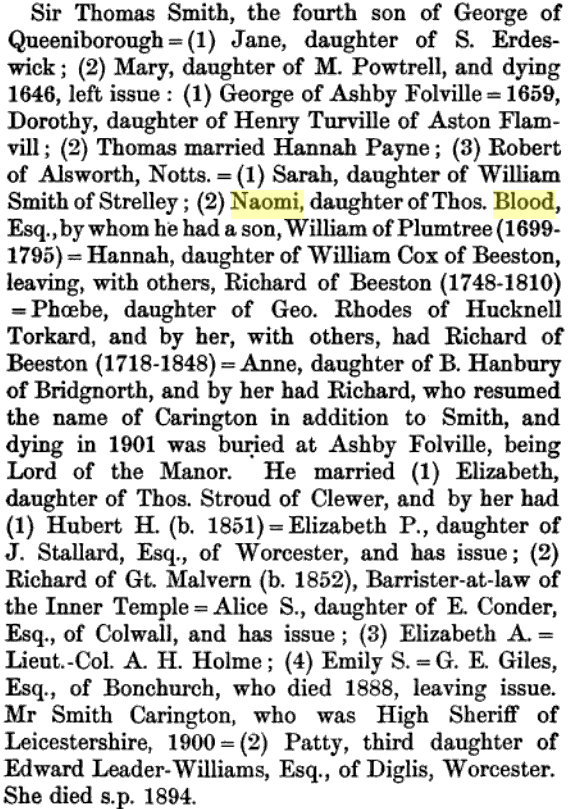
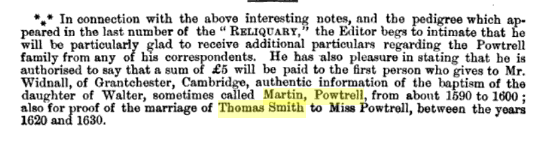
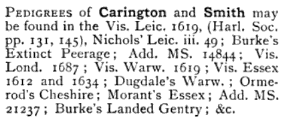
I have found the following summarized argument against the Smith-Carington lineage in “Notes and Queries” from Oxford University Press, 1907:
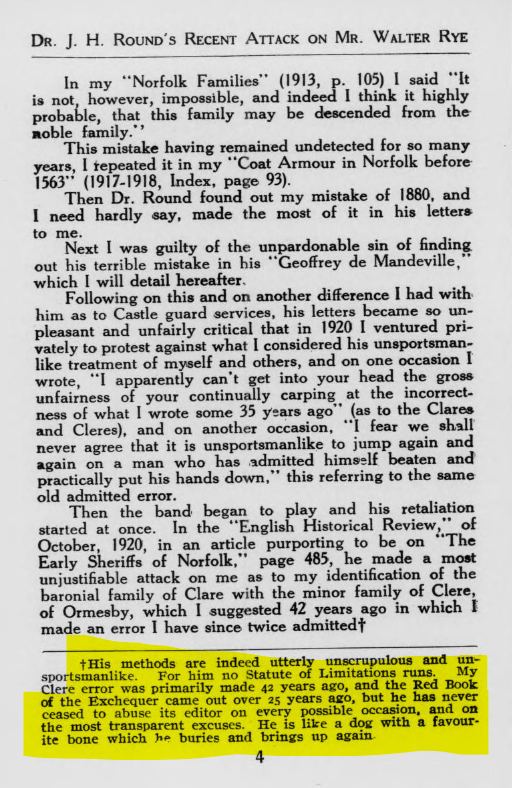
The key item is described between the yellow highlights. The mentioned Robert Smith married Naomi Blood.
My main concern on this subject is that lack of evidence is being used as proof of the contrary of a supposition. Fires, floods, etc… can destroy archives. I am not sure how one would explore the possibility of whether the archives of the involved areas have experienced losses such as these. Round was looking for records that were likely created over 240 years prior to his search for them.
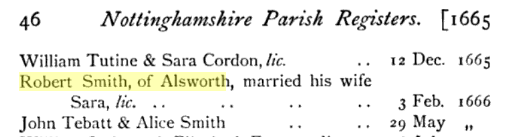
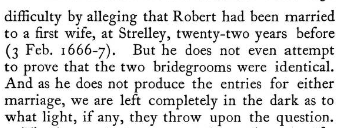
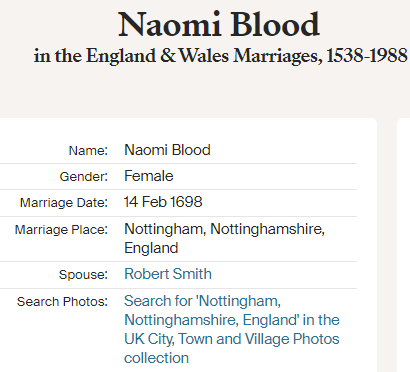
Among the Nottingham Parish Registers, we find the first marriage that could be for “Robert Smith of Alsworth”:
This marriage record differs from what Dr. Copinger presents. Sarah is “Sarah Abbott”. Who then, referring to Copinger, were William and Joane Smith?
New questions aside, we should keep in mind that 1) Richard Smith-Carington’s claim of descent is from Robert’s suggested second marriage, not his first. 2) Further, we would still need to ensure that Sarah Abbott had not been previously married, Abbott possibly being her married surname. I struggle to find sources that may be able to explore that question.
Further still, I wonder if it could be possible that a previous researcher had intertwined the identities of two different Robert Smiths and this was later assumed as accurate by Richard Smith-Carington and Dr. Copinger? I’ve seen such a thing happen in my modern research, but we would need rather explicit evidence in Richard Smith-Carington’s story. 3) How do we prove that the Robert Smith who married Sarah Abbott was the same Robert Smith who married Naomi Blood?
Round examines this question with an examination of the “Carlos Pedigree” on pages 231 to 235.
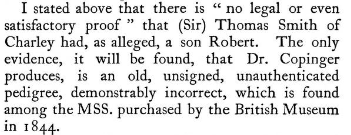
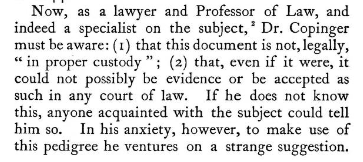
Further, regarding Sir Thomas Smith:
I wonder if Round places too much weight on the “chain of custody”?
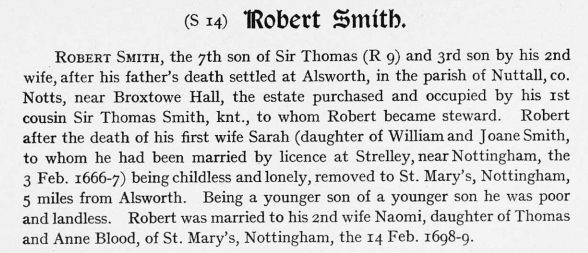
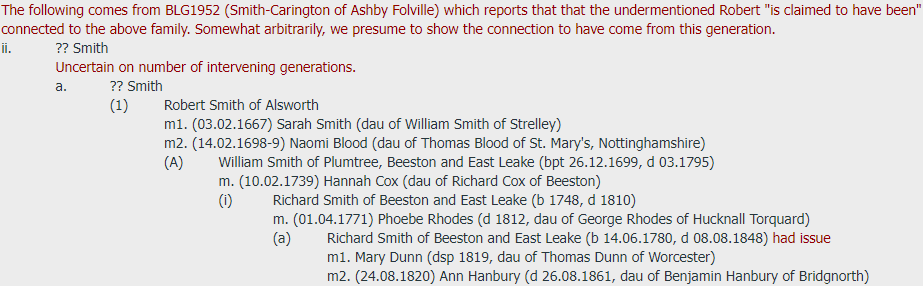
Robert Smith’s second(?) marriage:
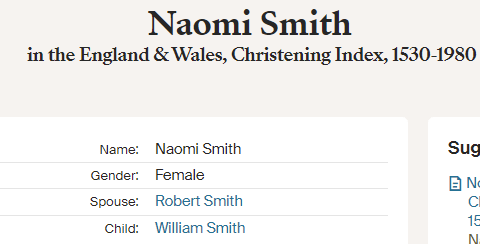
I do find among the christening records of St. Mary’s a child, William Smith, whose parents were a Robert and Naomi Smith.
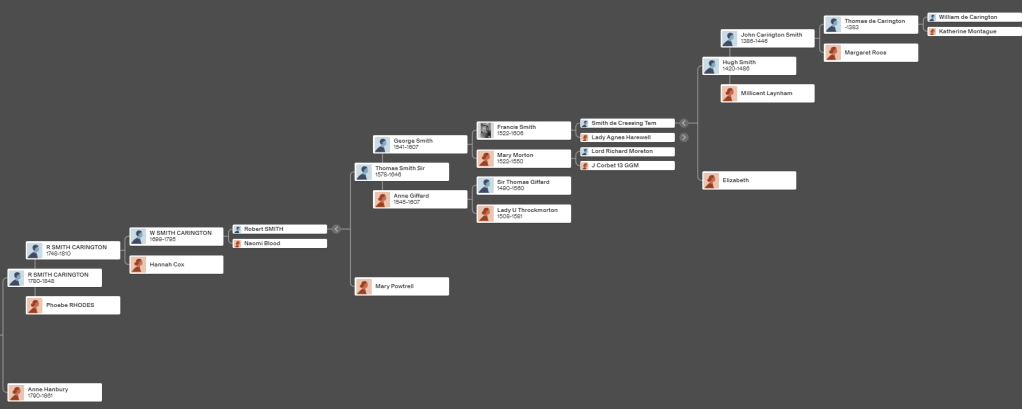
A tree, found affixed to the account of a 2x-great-grandson of the Richard Smith-Carington that Round excoriates. Take some time to verify.
Unresolved is any evidence that the two Robert Smiths were the same person.
Dr. Robert Thoroton lived 4 October 1623 – c. 21 November 1678
Sir Francis Topp appears to have been “Baronet of Tormarton”. His daughter Frances married Charles Stanhope, Esq. (of Stoke and Mansfield, line of 1st Earl of Chesterfield, temp. Charles II).
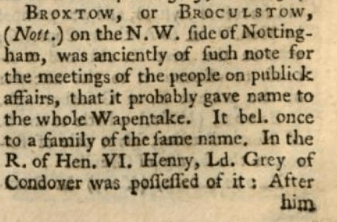
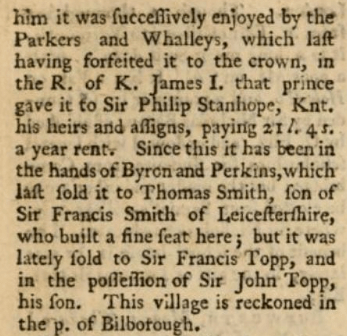
From Stephen Whatley, an earlier source for the sale of Broxtowe (Broxtow or Broculstow) [link]:
from England’s Gazetteer; Or, An Accurate Description of All the Cities, Towns, and Villages of the Kingdom: In Three Volumes pub. 1751
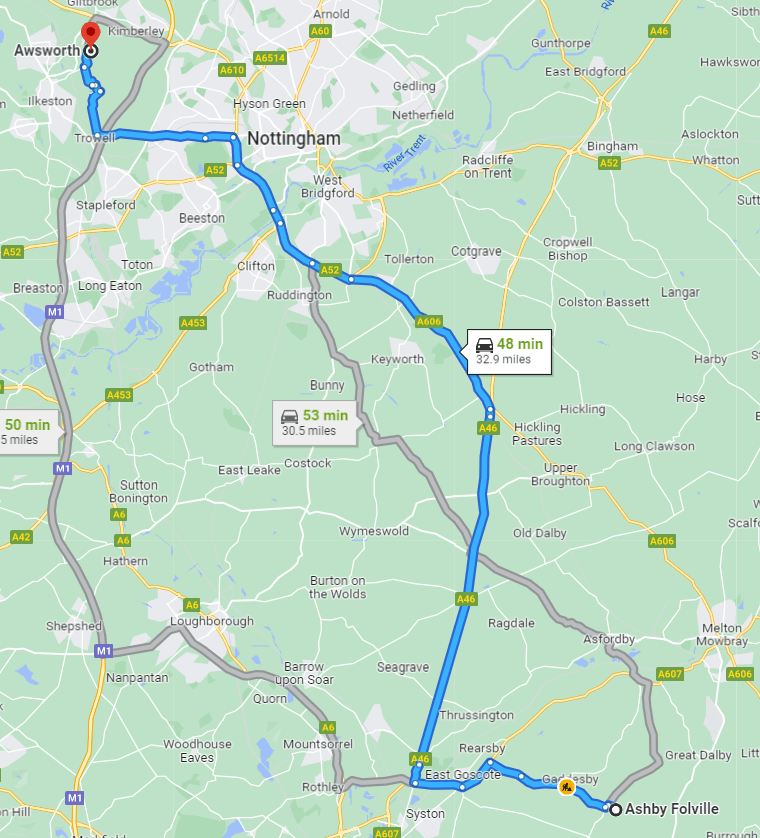
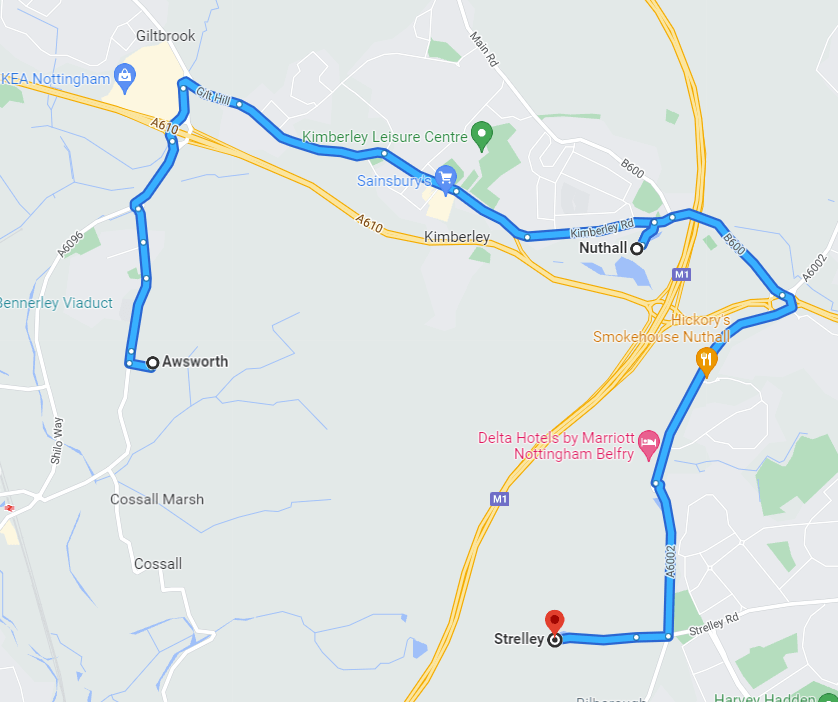
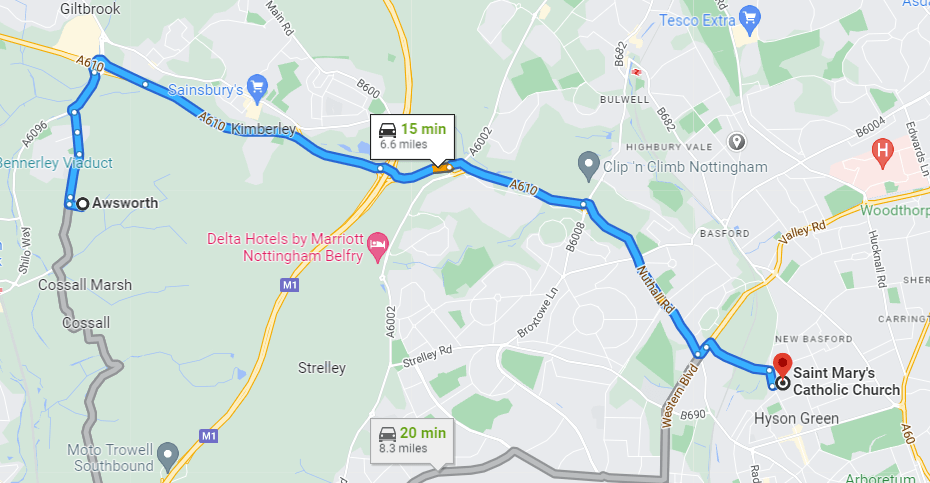
I believe what this information can support is that there clearly was a Sir Thomas Smith who held Broxtowe Hall in Nuthall, Nottinghamshire and that he was descended from Sir Francis Smith of Wooten Wawen, co. Warwickshire. Nuthall is, by today’s roads, only 3.4 miles from Awsworth, co. Notts. Strelley and Nuthall are only 2.8 miles from each other. This seems to be an appropriate and realistic neighborhood in which this story of Robert Smith of A[l]sworth to have taken place.
Back to Robert Smith of A[l]sworth…
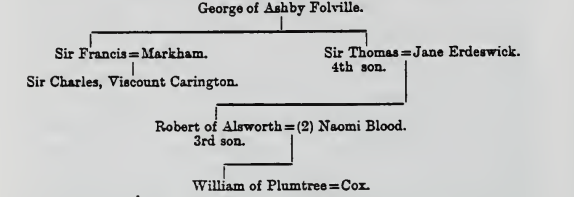
I will mention that Compton Reade has Robert Smith of A[l]sworth as Thomas and Jane’s 3rd son. Robert would have been Jane’s 3rd but Thomas’ 7th son as she was his second wife. I’m not sure who Reade is using as a source.
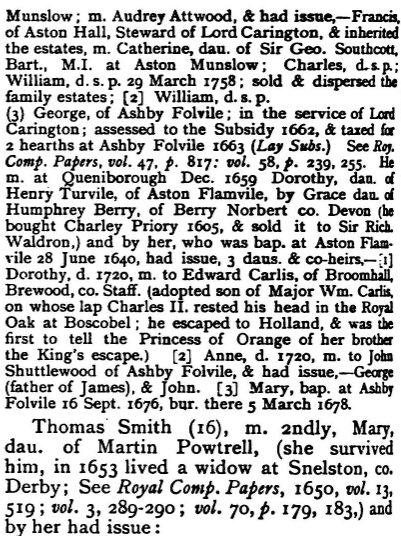
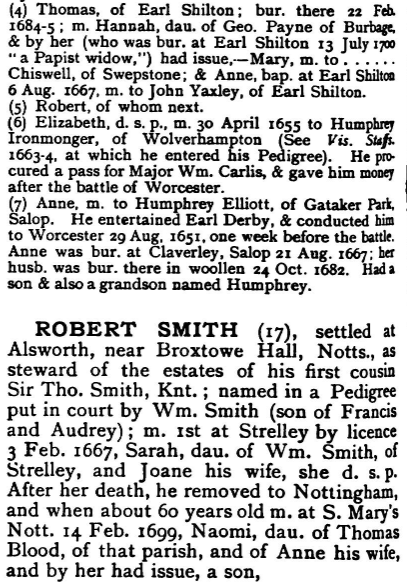
The best details I have found for Thomas Smith, suggested father of Robert Smith of A[l]wsworth is “Leicestershire Pedgrees and Royal Descents” by William George Dimock Fletcher (pub. 1887):
Here we see Robert Smith is said to have been named in a pedigree put in court by a William Smith of Strelley, a son of Francis Smith and Audrey Attwood.
Was Round wrong about the pedigree of Richard Smith-Carington? I’ll let you decide.
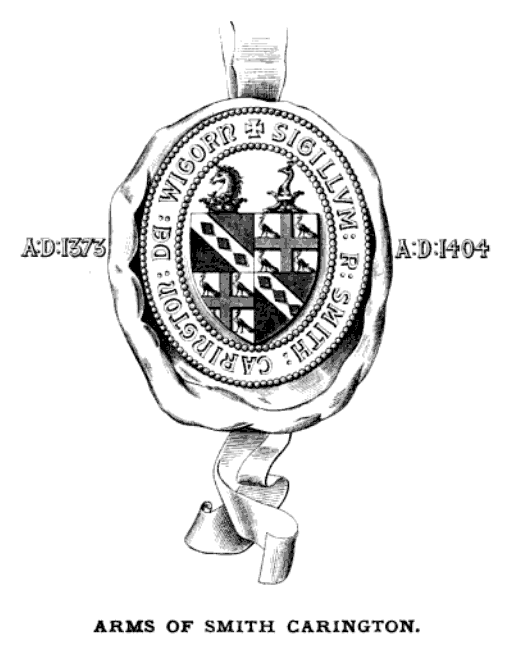
“On those arms I have much to say and we may here fitly examine the whole question of the heraldry. The old coat of the Cheshire Caringtons, which has thus been assumed, as their first ‘quarter’, by the Smith-Carington family, has never been in doubt. It is “sable, on a bend argent three lozenges of the first”, as is proved by the ‘Ballard’ roll (temp. Edward IV)”[1][2], by drawings of the windows in Bowdon Church (1530), and by a seal of William (de Ca)ryngton which Ormerod stated, in 1816, was affixed to a charter of 47 Edward III (1373-74). On this seal, Dr. Copinger comments that “The date of the charter 20 Dec 1374 proves the use of these arms for upwards of 530 years. (Cop p.41)”
Notes: search for “Ballard’s Roll of Arms” in Google. Can’t find an eBook unfortunately. It’s not in WorldCat either. It’s definitely real though. For reference, Round published in 1910. From Leicestershire Pedigrees and Royal Descents, “Richard Smith Carington of St. Cloud, near Worcester; resumed the old family name, by Deed Poll, 25 March 1878*; J.P. for Worc., and F.S.A.”
“Now this is a misleading statement. The ‘Smith-Carington‘ family do not appear to have assumed them till late Victorian days* [20 Jun 1837 to 22 Jan 1901], while the Essex Smiths, through whom they claim their ‘Carington’ descent, do not even appear to have ever used them at all!”
I will agree that Copinger probably mis-states how long the Carrington arms were continually in use.
Perhaps he had encountered the work of Henry Sydney Grazebrook:
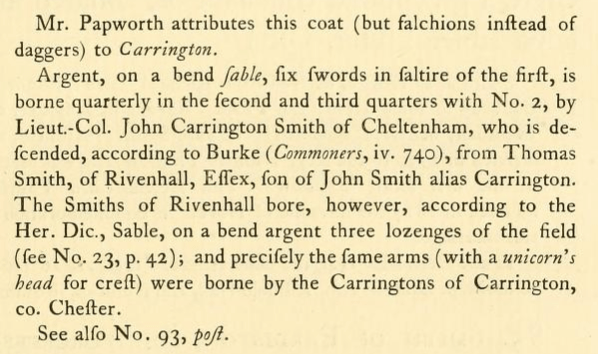
We know that the Smiths of Rivenhall never bore the Carrington lozenges. I am skeptical of the quality of information in this book.
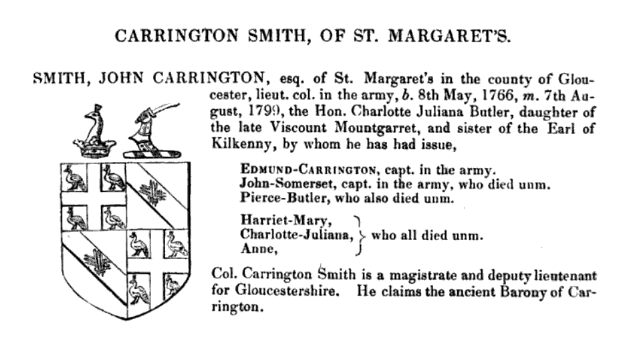
Grazebrook refers to this man, Lt. Col. John Carrington Smith [his will, a memorial] who married Hon. Charlotte Juliana Butler, a daughter of a Viscount Mountgarrett (whose son, Juliana’s brother, also held the title of Earl of Kilkenny):
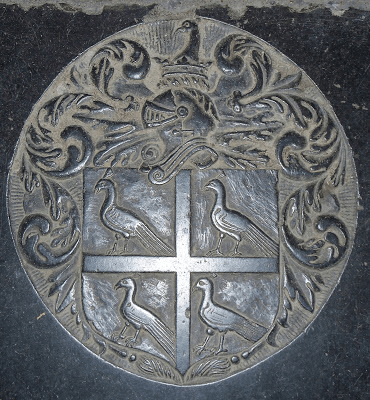
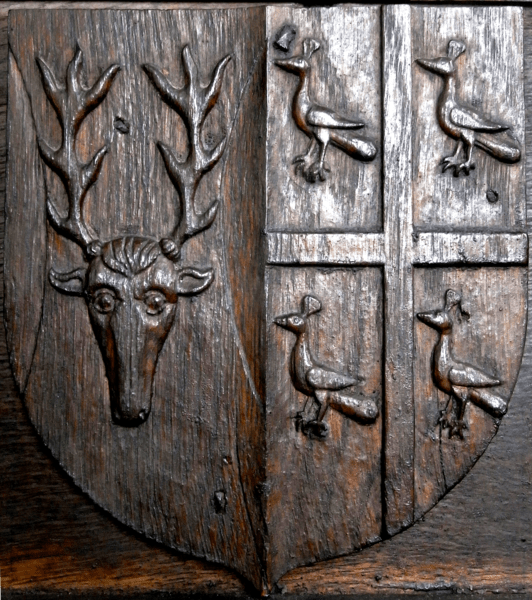
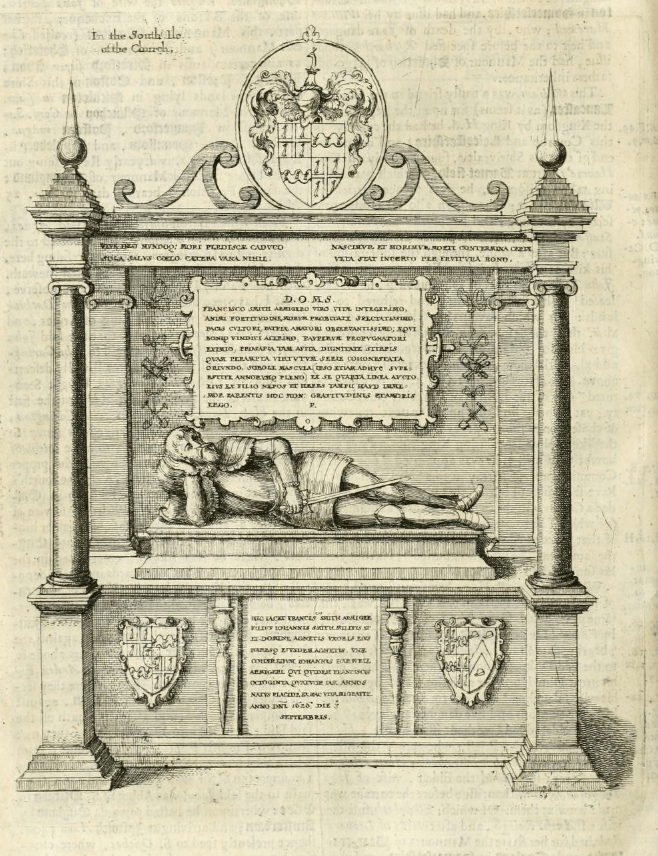
An inspection of this information [1] suggests there are no currently living Smiths of this line of Lt. Col. John Carrington Smith.Arms of Smith of BlackmoreSmith of Little Baddow WikiPedia page for Sir Clement SmithSir Francis Smith of Wooten Wawen, Warwickshire, tomb at St. Peter’s Church, from “The Antiquities of Warwickshire“. It is from Hugh Smith, ancestor of the Smiths of Cressing Temple, does Sir Francis Smith claim descent. Richard Smith-Carington also claims descent from Sir Francis Smith [a history].Arms of Sir Francis Smith of Wooten, Warwickshire.A close up of Sir Francis Smith’s epitaph [1] photos of tomb of George Smith of Ashby FolvilleAnother of Sir Francis Smith’s family [1]Arms of Carrington of ChesterArms of purported to be those of Smith of Wooten in Warwickshire. I believe these may have been created by the efforts of Richard Smith-Carington as an attempted homage to his claimed Carrington alias Smith ancestry.Arms of Smith of Ashby-Folville
Side project: For this Smith line of Ashby-Folville in Leicester, I can say with certainty that Richard Smith-Carington’s 2x-great-grandson (specific identity will not be disclosed here) is on Ancestry.com. I have asked him to do yDNA testing but I have unfortunately not yet received a reply to my initial efforts to contact him. I’ll be sure to update here if anything comes of this, which I hope it does.
Old wine in new bottles? Or new labels on old wine?
It is about these arms of Richard Smith-Carrington’s family Round makes a fuss. He claims that Richard Smith-Carington’s quartering of the Carrington arms is suspect based on the fact that the Smiths of Rivenhall did not include them in theirs. Round does confirm that the Garter King of Arms at the time had not “officially sanctioned their assumption”. Oh well.
Sir John Smith, Baron to the Exchequer used both, but not at the same time, “Argent, on a chevron sable 6 fleurs-de-lis or ; on a chief, of the second, a lion passant of the first” and later on, the peacocks of Smiths of Rivenhall. (Round Vol II p.186)
“On investigation we discover that Sir John Smith, as ‘of Cressing’, was acutally granted a coat by Barker, Garter King of Arms (1536-1549), a fact which proves conclusively that he had not inherited, as alleged, from his grandfather, the cross and peacocks coat, but knew himself to be a novus homo with no hereditary rights to arms.”
“This discovery is the key to the whole heraldry of the family.”
I feel, here, Round has made his most glaring error. A simple inquiry to the UK’s College of Arms sheds some light on the matter. My original e-mail was not preserved in the web form through which it was submitted, but the return was. The important bit:
“In certain circumstances, it may be possible for a person who has a right to arms to petition for a new grant of different arms in lieu of those to which he had an inherited right. In many cases, illegitimate sons, who do not inherit a right to arms, have been granted arms similar in appearance to their father’s, with an additional element included for distinction.”
“By the reign of Henry III [1207-1272], coats of arms were being inherited; previously, sons could take whatever design they preferred.”
Additionally,
“In 1417, Henry V proclaimed the first criminal law in heraldic law: he outlawed the practice of [self-]assuming [as opposed to being granted] coats of arms. The proclamation also empowered the sheriffs or other representatives of the king to deface the malefactor’s coat of arms, wherever it may have been-on his banner, his shield, or other chattels.(75) The proclamation was related to the practice of heraldic visitations, which, though its earliest records date from the reign of Edward IV, probably goes as far back as the reign of Henry V.”
It is important to keep in mind that the story of John Smith of Rivenhall, adventurer and would-be assassin of Henry IV, includes his name change from Carrington to Smith taking place in 1403, shortly after his return from Milan, Italy. He fled England due to his involvement in the Epiphany Rising Plot.
We can likely assume then that John Smith of Rivenhall was granted his arms just 14 years prior to a period of strict application of heraldic law, and as he and his family continued to use them, they must have been doing so legally, explicitly. Further, I believe we have credible sources that show there would be nothing that would prevent the issuance of new arms (Smith) to a man who had, at the time, an existing hereditary right to the arms of his father (Carrington). This point applies to two of Round’s attacks, 1) Sir John Smith, Exchequer to Henry VIII and 2) Smiths of Rivenhall.
We see a similar contrast between a) the accusations that there was a rogue 16th century herald who fabricated the pedigree of John Smith of Rivenhall and b) the state of Heraldic Law at the time. According to The College of Arms:
Brooke argued that these coats of arms were granted to unworthy or deceased individuals or were too similar to other previously issued arms.
I see no mention in the page I link to above of incorrect or forged pedigrees (anyone have a transcript?).
“Between 1530 and 1689 the Kings of Arms were given Royal Commissions to visit English and Welsh counties, to establish that arms were borne with proper authority. Anyone found using arms without entitlement was forced to make a public disclaimer.”
Where are the archives of these “public disclaimers”? (Most of the Heraldic Visitations are available on Google Books.)
Why then are the Heralds being accused, by some, of doing the very thing their king is ordering them to remedy?
I did run across one herald, not Cooke, who was allegedly beheaded due to his forging the seal of the Garter King at Arms. I can’t find the article now that I’m writing this post. If you know his name and story, leave a message.
Returning to Round:
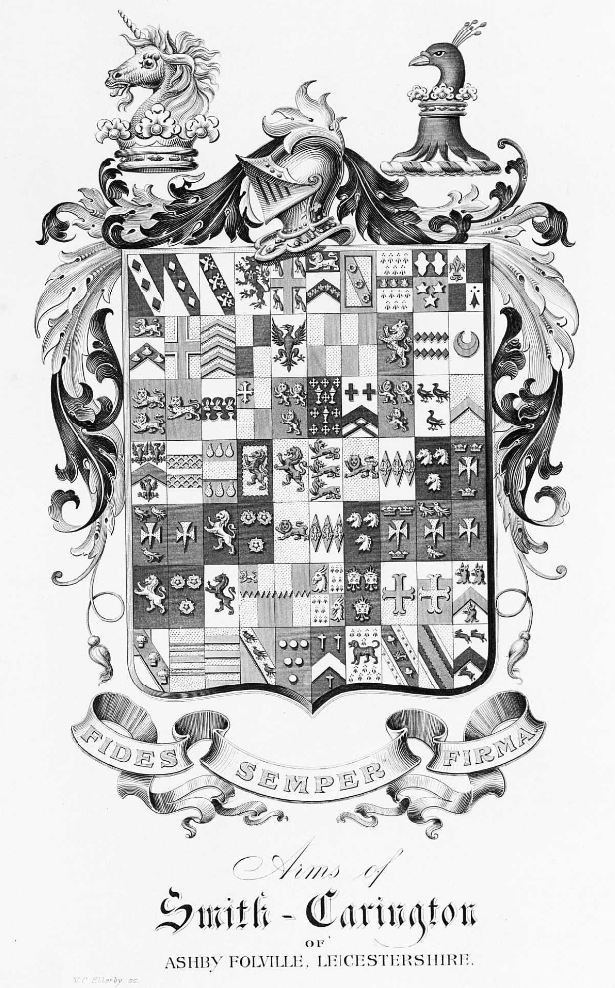
“But these, the old Carington arms, are by no means the only coat assigned to the family by the author. Indeed he speaks (Cop p. 4) of their “having at least at various times borne four different coat of arms”, while the great shield which forms his frontispiece actually displays six!”
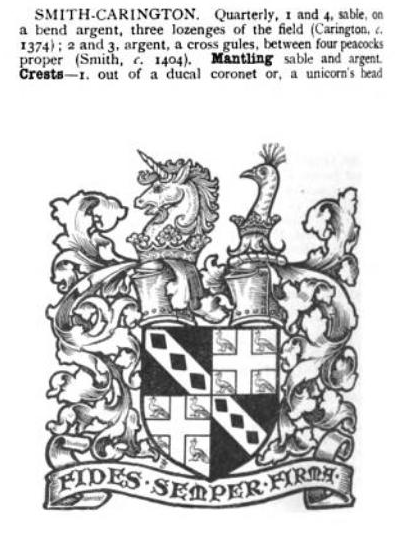
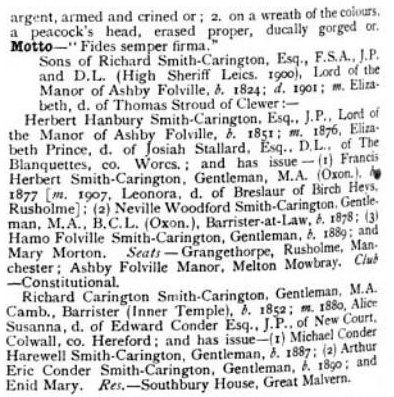
In referring to the “frontispeice”, we’re lucky enough to have a visual aid. Richard Smith-Carington has quite the assortment. The first 6 in the top left quarter are those arms to which Round refers:
“After the true Carington coat we have, (2 and 3) two variants thereof; then (4) a coat assigned to a medieval Sir Philip Carington; (5) the coat that was actually borne by the descendants of Sir John Smith (Baron of the Exchequer), and (6) the coat borne by Sir John Smith himself – which was totally different from any of the foregoing. These coats are thus marshalled in accordance with a vicious practice of heralds, who often, when a family had formerly borne a different coat, (or was alleged to have done so) added it, as a quartering, to the coat in use.”
So the main argument Round makes here is that since descendants of Sir John Smith, Baron of the Exchequer under Henry VIII, bore different arms than Smiths of Cressing Temple, the family from which Sir John Smith descended, there must be some impropriety on the part of the Heralds and Sir John Smith must not be descended from whom he claimed. However, again referring to my recent reply from the College of Arms, there is nothing that would prevent a man from being issued arms different from his father, if the circumstances are appropriate. Sir Clement Smith of Little Baddow was brother-in-law to Henry VIII and Sir John Smith was now Henry’s accountant. Maybe there was some desire on John’s part to have arms that distanced him from the story of his ancestor plotting to kill Henry IV while he was under the king’s employ? Or maybe it was a class level “boost” now that he was handling the king’s money? Just speculations on my part, but both equally credible, in my opinion, as to why he may have been free to bear two different coats of arms. One for personal matters, one for business.
An interesting item is the longevity of this doubt of the Carrington alias Smith story. Round (pub. 1910) cites George Edward Cokayne (G.E.C.) on page 186. Cokayne (pub. 1892) (sounds like Cocaine??) cites “Vincent’s Leicestershire” (pub. 1619).
“I cannot but feare this descent from which ye Smiths of Ashby Folvill and others of that name derive themselves; because it is scarce know that , upon any occasion, both name and arms should be changed, and Sir John Smith, Knt., Baron of ye Exchequer gave first [as the armorial ensigns of this family] Argent, on a chevron sable 6 fleurs-de-lis or; on a cheif, of the second, a lion passant of the first and then, after many years, ye issue of him have [as such armorial ensigns] ye cross, between 4 peacocks proper; and now they flye to Carrington sed quo jure penitus ignoro [translation: but by what right I do not know].”
Round goes on to state:
“Dr. Copinger, therefore, cannot plead that the tale he accepts as unquestionably true is one which has never before aroused suspicion.”
Here, Round argues that Copinger should not trust the Carrington alias Smith story because it looks suspicious. Where ever from Round and Vincent sourced their material, I am surprised they were not familiar with the aforementioned concepts that the right to hereditary inheritance of arms does not explicitly and wholly dictate what arms a man can or will bear, if any at all, nor do coat of arms have any wholly weighted explicit significance on the credibility or accuracy of a person’s documented ancestry.
Closing thoughts
Even if Richard Smith-Carington’s (re-?)adoption of the Carrington arms was “off the books”, this alone does not discredit his family’s claim of descent from the Smiths of Cressing Temple. That said, I can not say with certainty that countering Round’s armorial analysis proves his descent either. For that, we would need a thorough examination of the relevant vestry and legal records in Nottinghamshire for the time and place of Robert Smith of A[l]wsworth. I feel that “Leicestershire Pedgrees and Royal Descents” by William George Dimock Fletcher (pub. 1887) provides high quality references for the familial relationship between Robert Smith of A[l]wsworth, co. Notts. and the family of Francis Smith and Audrey Attwood, descendants of Sir Thomas Smith who was allegedly knighted by Charles I. Finding a means to verify Fletcher’s sources will be challenging, but you’re welcome to assist.
If you’ve made it this far, I appreciate your interest in this story and thank you for your time.
For this post, I can give you the tl;dr here in the foreword. Back in 2009 my Smith line was yDNA matched to the Butler line of the Earls of Carrick in the Peerage of Ireland.
This Butler line carries the modern variant of the yDNA of Rollo and they have the paper trail and other provenance to support this, including autosomal DNA matching (which, for privacy reasons, has not been published) that supports their paper trail pedigree. Before his passing, I communicated, however infrequently, with my match via e-mail for a number of years, and later with his sons. His family has granted me written permission to discuss their larger Butler family story within the context of my research.
This Butler line is patrilineally descended from Hervey Walteri, the progenitor of the Butler Dynasty and a patrilineal descendant of the original Dukes of Normandy. They are agnates of William the Conqueror, Henry I, and William Adelin who died as a result of The White Ship Disaster.
Most notably, the pedigree for my group’s match has been publicly published by Prince William, Duke of Cambridge and this family tree information is managed, online, by a documented cousin family of my match’s family.
I’m wanting to avoid a big build up of drama or suspense in the release of this information, that the yDNA of Rollo has been partially sequenced, because there are other items that I wish to address.
First, I believe the 12 marker sequence and values are Intellectual Property of FamilyTreeDNA. That said, I can not wholly approve of how FTDNA manages their public volunteer led projects. They get a strong 5/10 from me in this regard. I do find, however, that their yDNA testing is the most precise among the available genetic genealogy companies.
Second, I believe I may be the first to accurately publish on this subject. Please use what information I provide here respectfully, responsibly, and honestly.
Currently published research
There appear to be many online discussion groups that have explored this subject of the yDNA of the original Dukes of Normandy and I wish to present my information here, on my public blog, so that these groups can correct or refine what they have publicly published. At the very least, I hope I may elicit the finale of the seemingly endless speculation on this topic that is abundant on the internet.
For notes, none of the following projects, researchers, or groups have ever contacted myself nor my yDNA match (to my knowledge) for information pertaining to their research.
It should be very clearly understood that I, Christopher Smith, the author of this blog, do not necessarily support or echo any of the published statements or conclusions found in the following publications. I present them at face value, as sites that have engaged in some form of research pertaining to the yDNA of the House of Normandy, as it pertains to the original Dukes of Normandy.
Further, this is not a comprehensive list and I will add to it as I refine my Google search results.
International research efforts
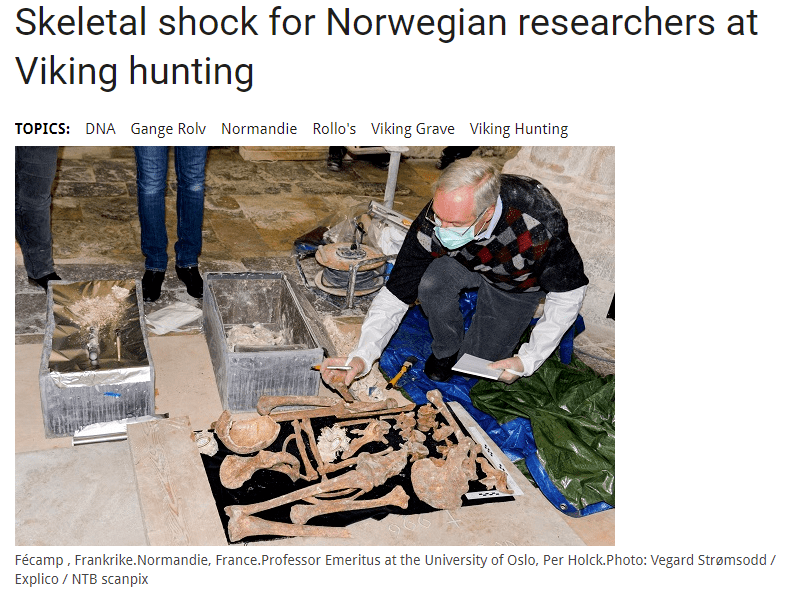
I have a deep love and respect for academia and credible educators. I would have loved to have been a part of the following research effort. This first article was the most credible effort that I came across to really study the question of the yDNA of Rollo. It is the most interesting as it involved an inter-governmental and collaborative academic research effort between France, Norway, and Denmark.
I will note that this research effort was ultimately ruled fruitless due to 1) the age of the bones identified in the sarcophagi and 2) the amount of lead said sarcophagi contained. No useable DNA was recovered from these efforts and, after the bones were examined, it was determined that there was very little likelihood that they belonged to kinsmen of Rollo.
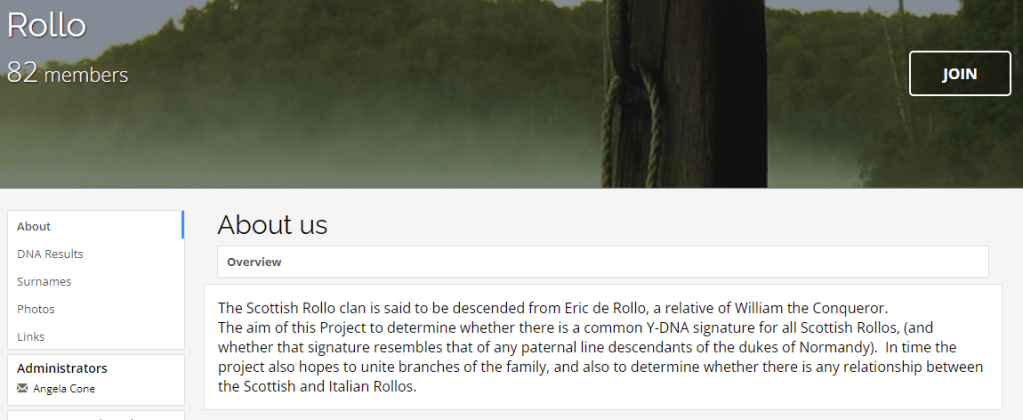
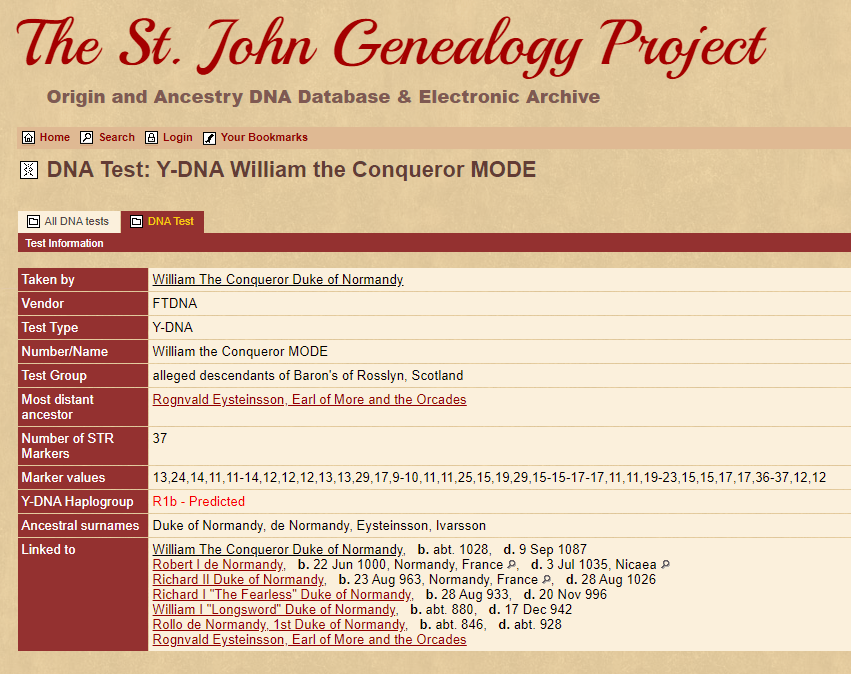
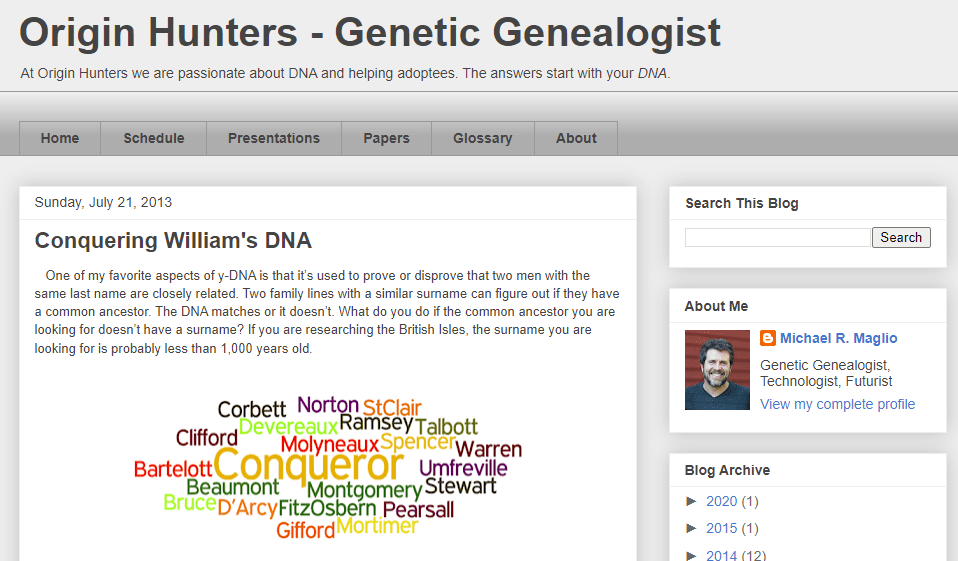
Further, I have identified the following projects as having published possibly incorrect or misleading information about the yDNA of the House of Normandy, specifically that of Rollo’s and the Dukes’. This story was re-posted on a number of sites/blogs and, for tidiness, I will not repeat them here.
It must be made very clear that I have not evaluated the claims of this site’s author and do not wish to discuss the subject matter they have published outside of the scope of the yDNA of the House of Normandy. I also am not wishing to advertise for or support the services they offer. We have no affiliation.
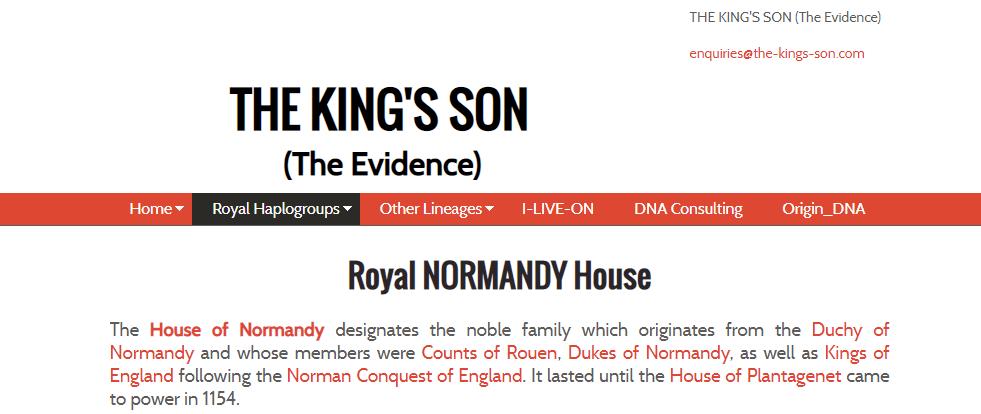
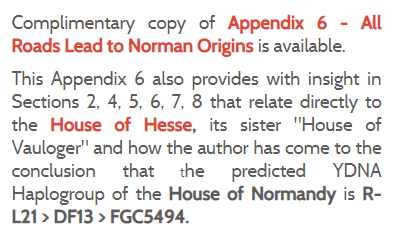
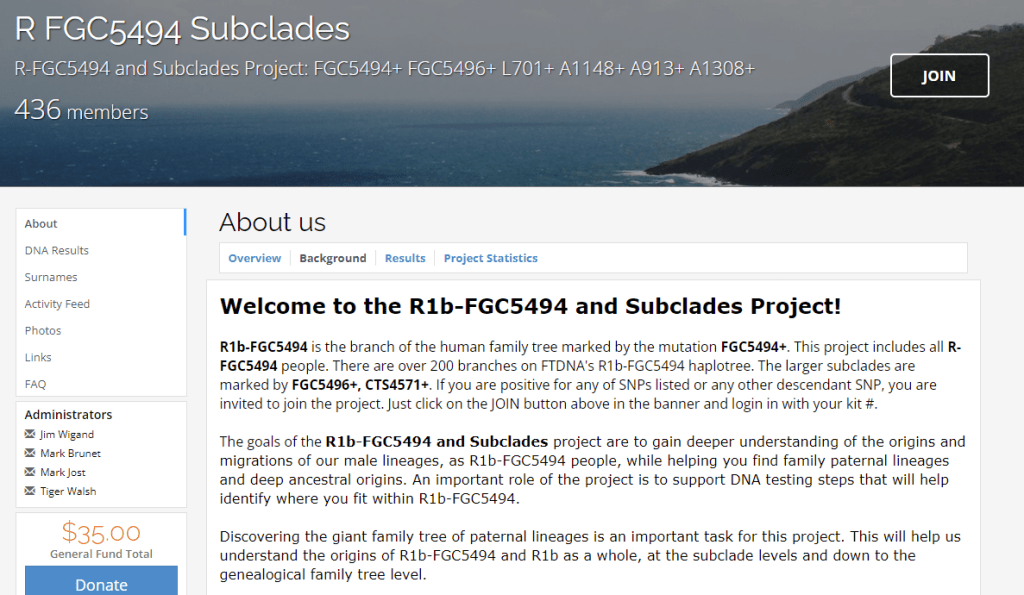
I believe I must disagree with their findings that the yDNA of the House of Normandy was, in modern terms, FGC5494. That said, I do believe they are the closest yet to accurately identifying the yDNA branch of the larger yDNA haplogroup tree (a subclade of DF13).
I will cite my own yDNA information and research as evidence. I am open to critique and peer review. From my group’s WikiTree project page:
Our Smith group is proven to be R-CTS2501 (aka but != R-DF41) a subgroup of R-DF13, R-L21, R-S461, R-P312, R-L151, R-PF6538, R-L52, R-L51, R-L23, R-M269. Further, BigY testing has grouped two of our autosomally distant Smith yDNA populations into R-FTB93197. This FTDNA specific haplogroup was created on 6 Sep 2015. To my knowledge, my blog and my group’s WikiTree project are the only online sources that properly and thoroughly explore from where this yDNA haplogroup originates.
Smiths, Butlers, and the Dukes
If you’ve made it this far, you probably have a lot of questions, and I appreciate that. I will direct you again to my Smith group’s Wikitree project page. Most of what you will be asking will be addressed there. You will also likely benefit from a reading of Countering “The Great Carrington Imposture” (as well as other postings in this blog which you are currently reading). Admittedly I have not thoroughly completed my analysis and critique of Round’s efforts as I was at the limit of my understanding of the subject matter when I completed the first part, and quality sources for much of the older subject matter is outside of my reach. I have since spent the majority of my time exploring why, when my family had never had stories of such things passed down, our Smith yDNA is being linked to the House of Normandy.
My uncle once told me of a short conversation he had with my grandfather. He said he had asked him “Who were the old Smiths?” to which my grandfather answered “Why should it matter?”. I very much agree with this sentiment, but also believe that if one has the ability to preserve history, real history, one is obligated to do so. I am likely the first of my family (immediate or otherwise) with the technical and academic skills and resources (time, namely) to properly explore our earlier American story (I will later post about a research effort by my cousins in Indiana). I was not expecting to be able to find English origins for our Smiths, but it is something I felt I have had to stringently explore, with discipline, since the information has placed itself in my lap.
The Carringtons of Chester, as it is well documented (despite Round’s objections) were said to have been patrilineal descendants of Sir Michael of Carrington in Chester (Cheshire). Sir Michael’s paper trail traces his male line lineage back to an Adae of Carrington, heir to a Hamo of Carrington who, according to M. Lionel Angus Butterworth, was a kinsman to William the Conqueror. Hamo was said to have been a son of a Marquis of Carentan in Normandy, France.
Note: This evening, 6/8/22 at around 11:30PM ET, I found this blurb in “The Carrington Imposture” by John Horace Round (Peerage and Pedigree, Vol II, pg. 157):
“We read further, under Adam de Carington, that The Manor of Carington being only four miles from Warrington, tradition favours the belief that Hubert Walter recommended Michael de Carington to the notice of the lion-hearted Richard, which led to his appointment as Standard Bearer to the King.”
I believe Round is citing Dr. Copinger, but from where Copinger gets his information, I do not know.
There is also a socio-political affinity between the Smiths, Carringtons, and Butlers that can be found among the records of the family of George Booth who married Jane Carrington, last heir to the Carrington estate. It can be demonstrated through documented marriages and legal cases that all of these families intermarried.
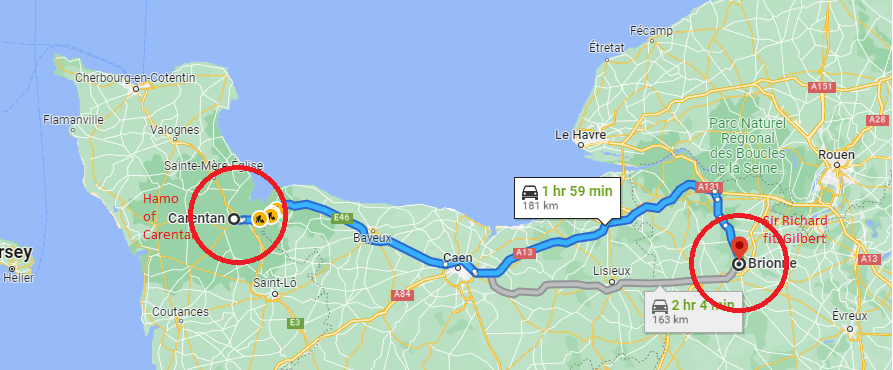
For reference, here are the ancestral homes of Hamo of Carentan and the Butlers.
That’s 112.4 miles for those in the US.
Closing
There is A LOT of information that has been published online about these families and lineages, and the quality of the content of many of these earlier authors, even those of the late 20th century, leaves much to be desired. However, I believe this current blog posting is the first to accurately identify yDNA of the male line of original Dukes of Normandy.
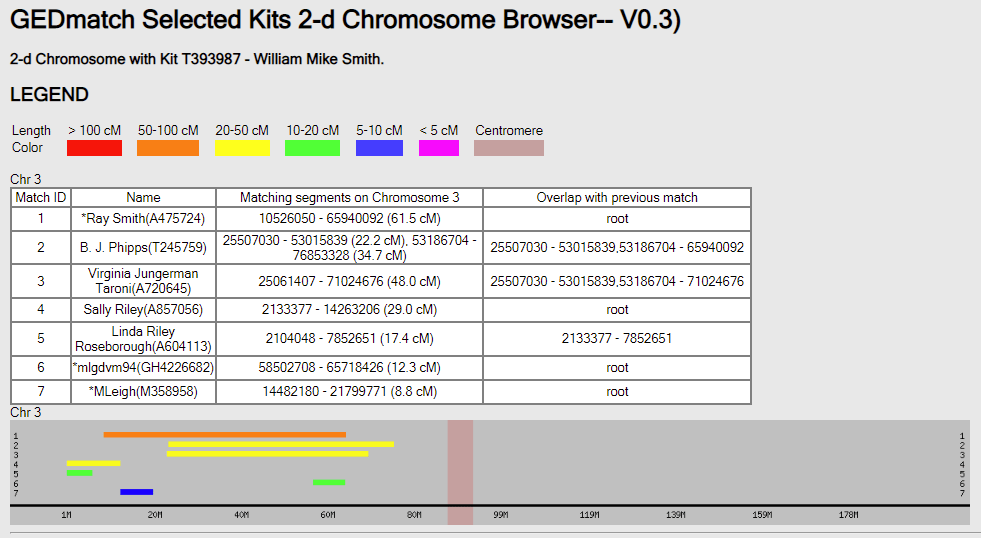
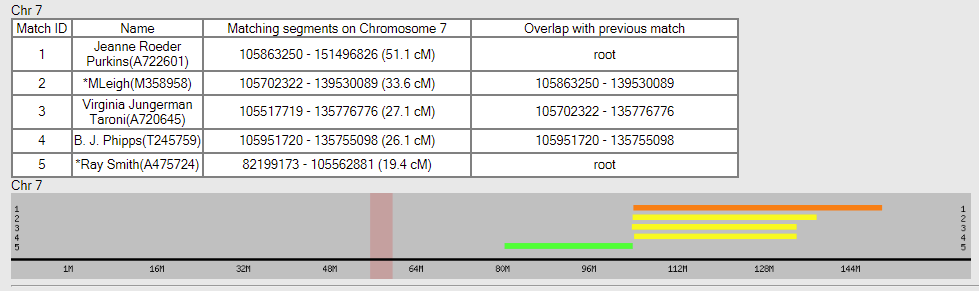
Some time ago, I was autosomally matched with a number of folks who all appeared to share significant amount of DNA with my dad and his 3rd cousin on Cr3 and Cr7.
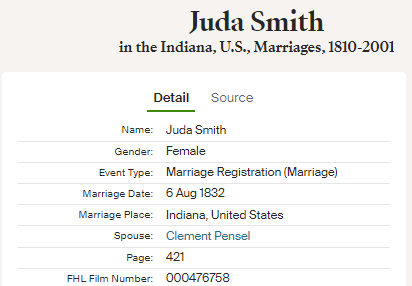
After an initial research effort, it was determined that all A722601, A720645, and T245759 descended from Clement Whitaker Purcell who married Julia Ann Smith Aug 6 1832 in Lawrence Co, IN. This has since become an anchor population for my Salt Creeker Smiths when doing autosomal comparisons.
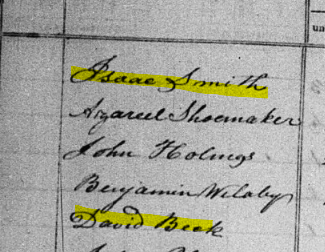
If my memory serves me correctly, based on my prior research, Clement and Julia were married by a David Beck.
I have seen either a transcription or a photocopy of the 1832 record that includes David Beck’s name, but it eludes me at the time of this writing.
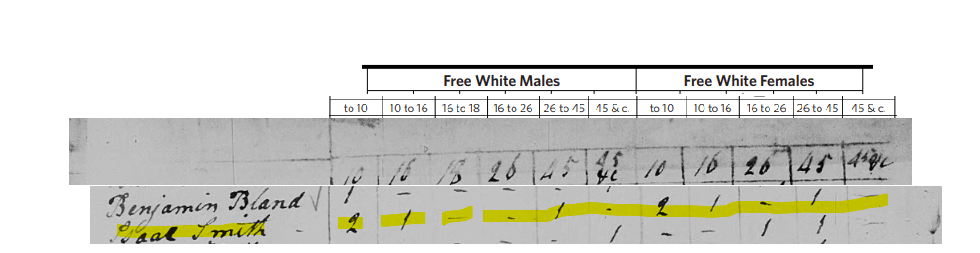
For notes, Isaac Smith, Sr. was in Jackson Co, IN by 1820:
2 sons, b. between 1820 and 1810
1 son b. between 1810 and 1804
1 man b. between 1794 and 1775 (Isaac Smith, Sr.)
2 daughters, b. between 1820 and 1810
1 daughter, b. between 1804 and 1794
1 woman, b. between 1794 and 1775 (Nancy Hendricks b. 1793).
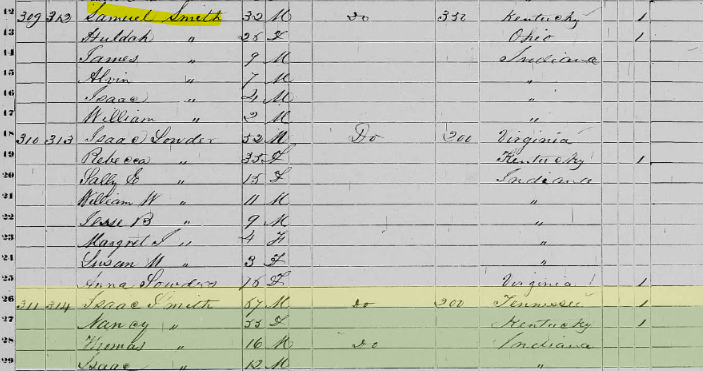
It should be noted that Samuel Rice Smith was born in 1819 in Rockcastle Co, KY, just outside of Mt. Vernon. This suggests that most, if not all of Isaac’s children who were alive in 1820 were born in Kentucky.
In the 1830 Lawrence Co, IN census, we find David Beck 4 houses away from the family of Isaac Smith and Nancy Hendricks.
David Beck can be found as the JP on a number of Lawrence Co, IN marriage records.
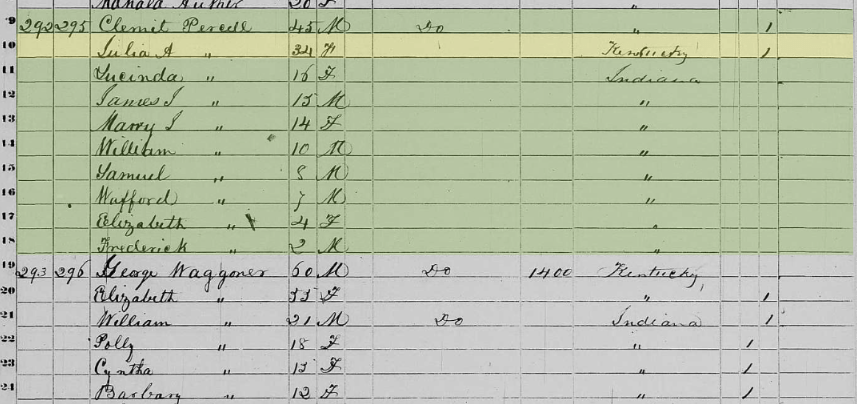
In the 1840 Jackson Co, IN census, we find Clement and family on pg 28/115 on Ancestry.com:
This entry next to David Waggoner is important because David had a brother Frederick Waggoner who was the boyfriend/fiancee’ (consort) of an Elizabeth Smith who was the sister of Samuel Rice Smith. Futher, an Elizabeth Waggoner, a daughter of George Waggoner, David’s father, was the wife of a William Smith who was a brother to Samuel Rice Smith. This 1840 census record places Clement Purcell and family in immediate temporal, social, and geographic proximity to the family of Isaac Smith and Nancy Hendricks Bridgewater.
In the 1850 Jackson Co, IN census, we find the families of Samuel Rice Smith and Isaac Smith, Sr. on pg 14/28.
Clement and Julia are on pg 12/28 enumerated next to, again, George Waggoner and Elizabeth Phillips.
This being the first census that provides a clear age for Julia, we see she says she was born in 1816 in Kentucky.
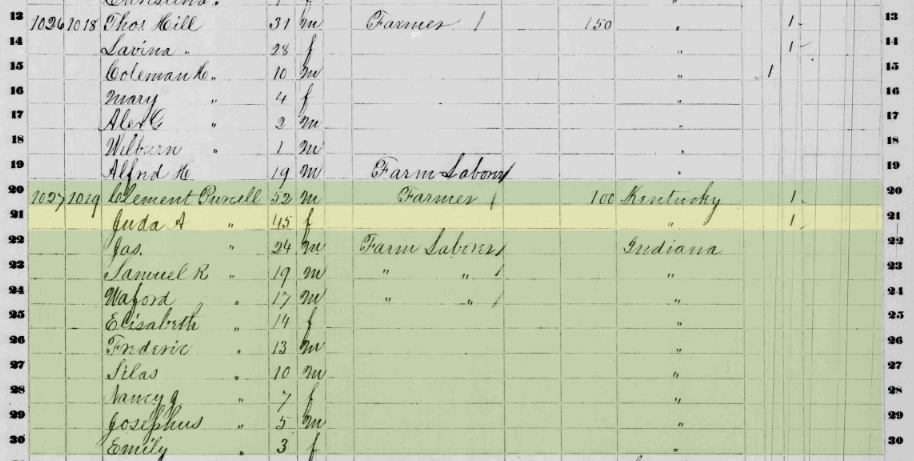
In 1860, we find Clement and Julia in the Washington Twp, Putnam Co, IN census. Their neighbors are not all that surprising. Thomas Hill and Lavina Smith, a sister of Samuel Rice Smith.
Again, we have an age for Julia. She is listed as having been born in 1815 in Kentucky.
Thomas Hill and Thomas J. Smith who married Catherine Holmes served in the Union ranks during the Civil War. Thomas Hill was assumed to be KIA as he never returned from the front. Thomas J. Smith was another brother of Samuel Rice Smith’s that was among the first of the Smith family (and likely the “Salt Creekers”) to migrate west to southern Illinois to the area known as “Little Egypt”.
To supplement this paper trail that shows the long-term temporal, social, and geographic associations of Julia Ann Smith Purcell with the children of Isaac Smith and Nancy Hendricks, I will provide an autosomal analysis of some of Julia’s descendants.
All M358958, A722601, A720645, and T245759 descend from Clement Whitaker Purcell who married Julia Ann Smith Aug 6 1832 in Lawrence Co, IN.
The confusion comes into play when we examine the currently published information about Julia Ann Smith. Most online trees have her as a daughter of a Reuben Smith and Hannah Warford. This association, in my opinion, is only made via the presence of the name “Warford” or “Wolford” in the descendants of Clement Purcell. There is only one problem with this theory: Reuben and Hannah were never in the right places at the right times to be Julia’s parents.
The Reuben Smith and Maximilllian Robinson family were members of a covered wagon train that left Shelbyville, Kentucky and ultimately settled in Putnam County, Indiana. They arrived in Marion township, Putnam Co. on October 6, 1822. They found the country comparatively unsettled with white people but well inhabited with Indians. The first few years there were difficult, as it was for all early day settlers. The family was very religious. The children were baptized as babies and began receiving religious training early in life. Joe Warford, Reuben’s brother-in-law, organized the first church in the community, the First Methodist Church. One of Reuben Smith’s daughters died in April 1821, leaving a small son who was raised by the family. In 1832, another sister died (Mary Ann Owen) leaving three small children who were also reared by Reuben and his wife.
1830 – Putnam Co, IN
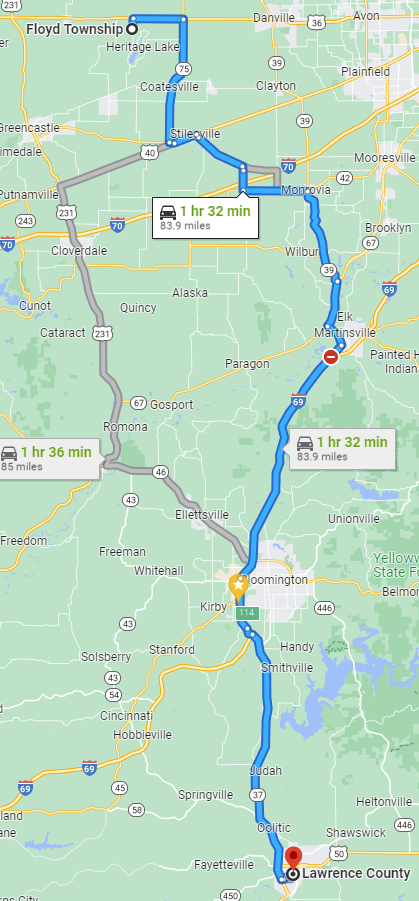
For the 1830 info, we have to ask ourselves, “Why would Julia’s parents be 72 miles to the north while their daughter was still an unwed minor?” This doesn’t make sense.
1840 – Putnam Co, IN 1850 – Floyd Twp, Putnam Co, IN
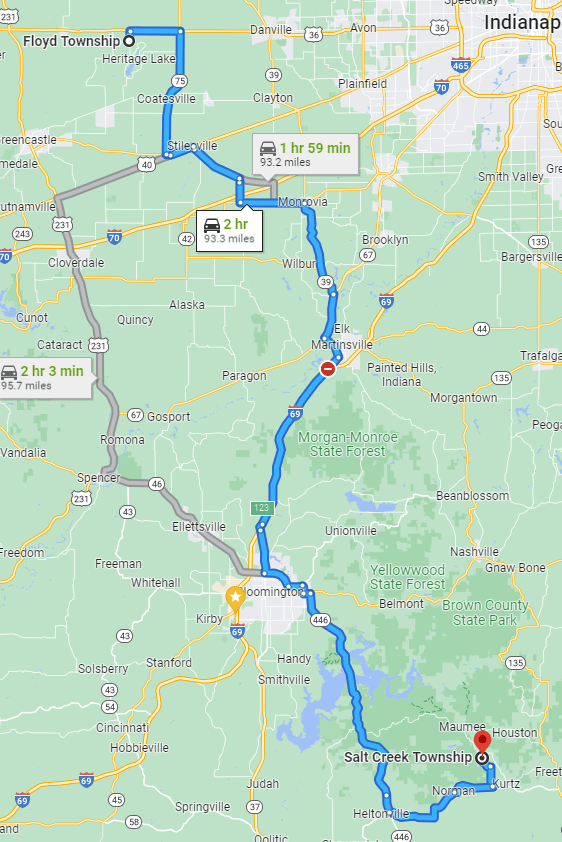
Salt Creek Township and Floyd Township are more than 90 miles removed from each other.
My alternative hypothesis is that Julia Ann Smith Purcell was a daughter of Isaac Smith and Nancy Hendricks. It is likely not a coincidence that Nancy Hendricks’ mother’s name was Julia Ann Rice (wife of Coonrod Hendricks).
I will present an additional bit of autosomal evidence for this hypothesis.
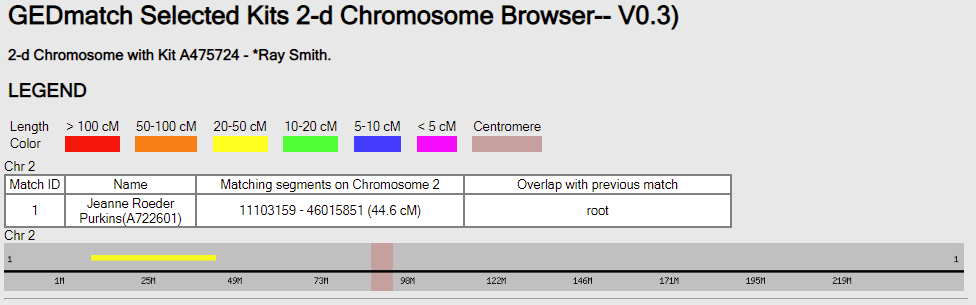
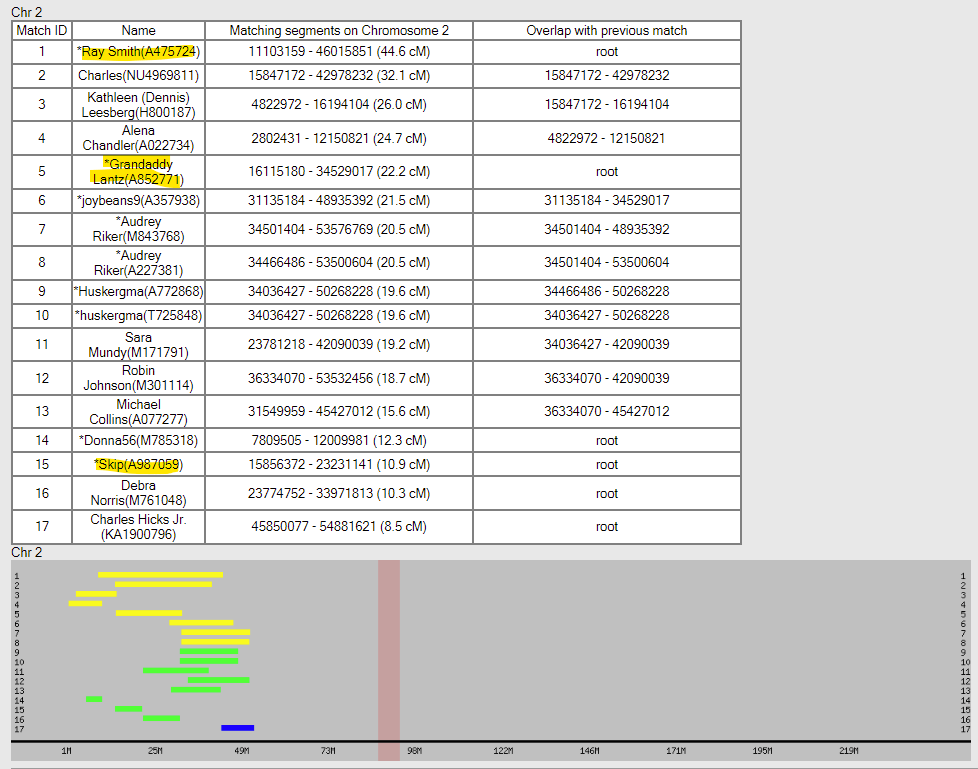
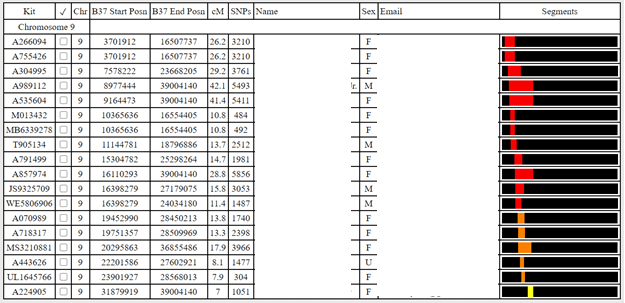
Let’s examine this segment of DNA shared by A475724 (descendant of Samuel Rice Smith) and A722601 (descendant of Julia Ann Smith Purcell).
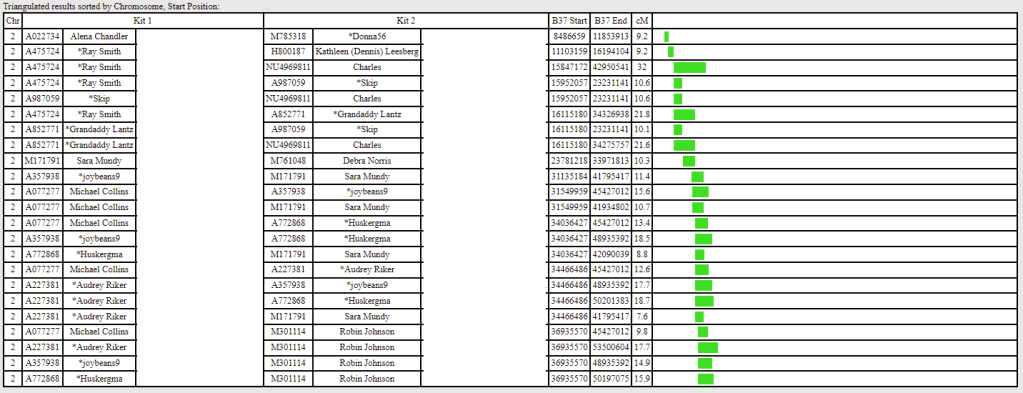
Running a matching segment search and then a triangulation report yields the following:
We find among the triangulated matches a “Skip” (A987059) and a “Granddaddy Lantz” (A852771). “Skip” is George Robert Jungerman, Jr. He is a documented descendant of Clement and Julia (same as A722601). A852771 was a new find and a bit of research yielded that this person is a documented descendant of Coonrod Hendricks and Julia Ann Rice, parents of Nancy Hendricks Smith Bridgewater. Additionally, there is a Charles E. Hendrix (NU4969811) that also matches at this location, however I have not confirmed if Charles is a descendant of Coonrod and Julia.
I believe the match between 1) two descendants of Clement and Julia (Skip and Jeanne), 2) a descendant of Samuel Rice Smith (Ray), and 3) a descendant of Coonrod and Julia Rice Hendricks (Lantz) is sufficient to demonstrate that Julia Ann Smith was a descendant of Coonrod Hendricks and Julia Ann Rice, as the above paper trail suggests.
Back in September of 2021, I made contact with a Kasey Diane Brooks Brady on Facebook. This was around the same time I was blocked from the SmithsWorldWide Facebook group.
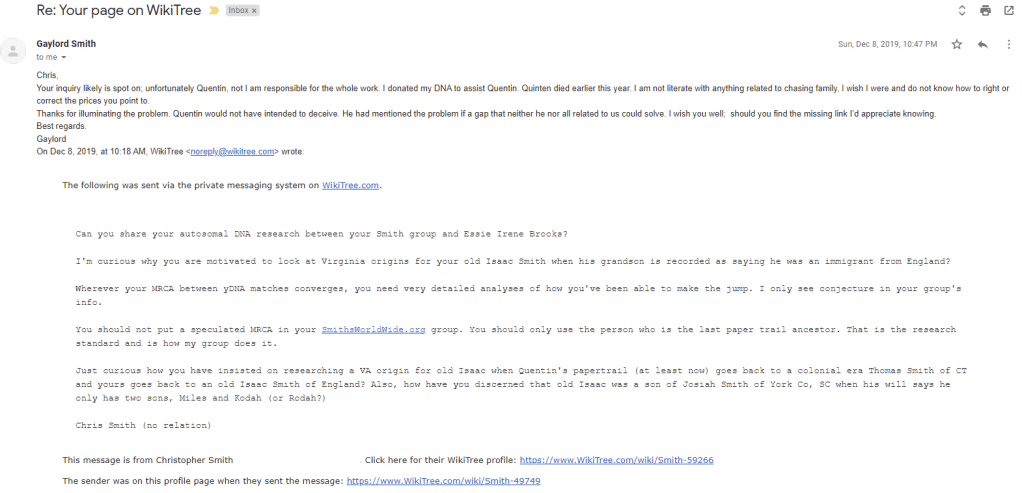
I had posted some of my research to the SmithsWorldWide Facebook group about what had been published by group R-M269-32 pertaining to Josiah Smith of Brunswick Co, VA on their site, and I had included Kasey as her group membership in the project needed to be changed. As she was working only with autosomal DNA, no yDNA match had linked her Smith family to R-M269-32. She had previously been working from some of Quentin and Gaylord Smith’s research, and it was only from their errant published information was she linked to R-M269-32.
My posting to the group demonstrated that two Josiah Smiths that had been linked by Quentin and Gaylord could not have been father and son, and I had supporting evidence (e-mail below is of first discussion about this subject with Gaylord Smith.
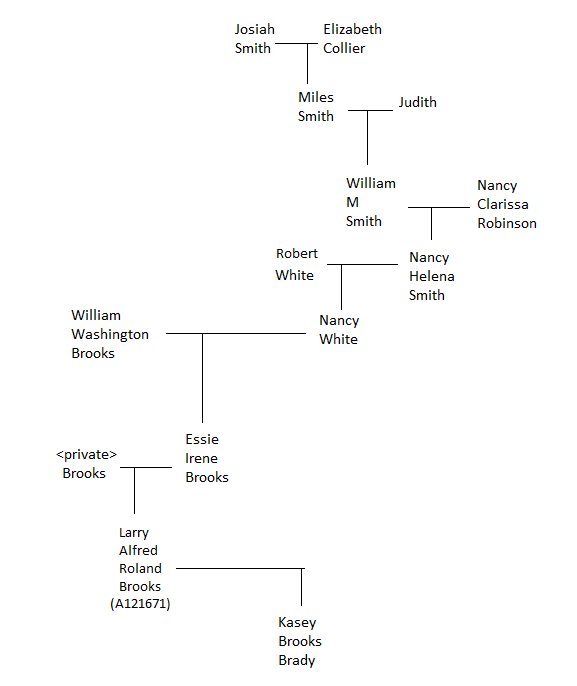
After introductions and some conversation, Kasey informed me that she lives in the county in South Carolina where Josiah and Elizabeth are buried and her connection to that couple came from her father’s mother’s ancestors. Kasey’s grandmother was Essie Irene Brooks, and Kasey’s 4x-g-gf was Miles Smith. He was a son of Josiah Smith and Elizabeth Collier.provided with permission
Nancy Helena Smith
b. 25 Oct 1844 York Co, SC d. 20 Jan 1888 Jackson Co, GA.
For the first time, I am publishing my previous work involving known documented descendants of Josiah and Elizabeth and their autosomal connection to descendants of Stephen Smith of Blount Co, AL.
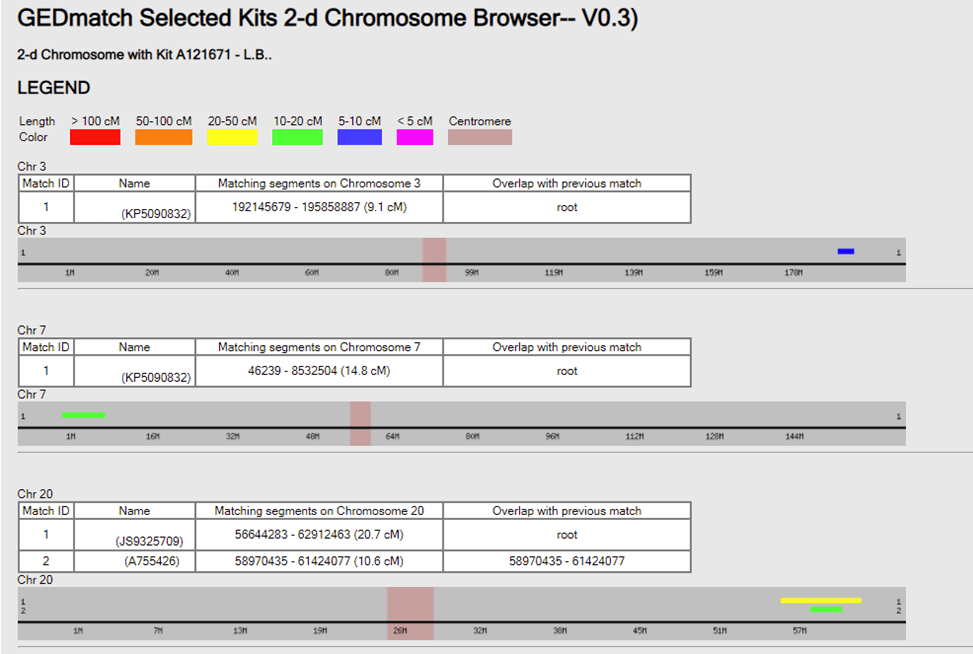
Putting all of this information together, we can see a 2D chromosome browser comparison of all of the kits:
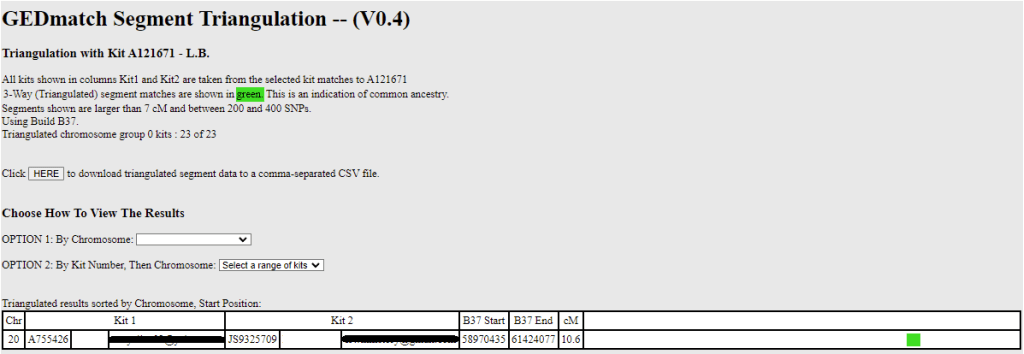
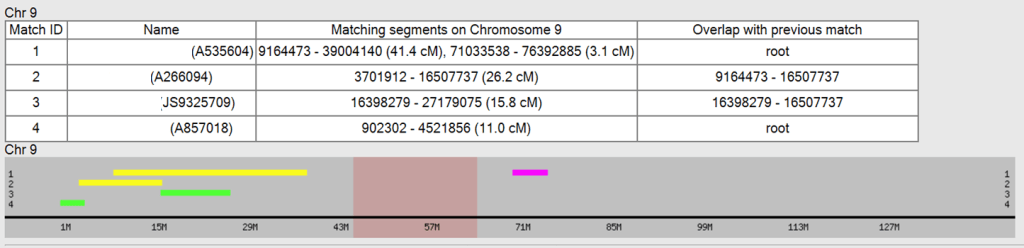
Kasey’s dad’s (Larry Alfred Roland Brooks) kit triangulates on Cr20 with JS9325709 and A755426, known descendants of Josiah and Elizabeth (first identified as part of RS1118028 autosomal analysis).
JS9325709 and A755426 are also valuable in this next step of the analysis.
To preface, by comparing multiple autosomal kits of descendants of Stephen Smith and Nancy Rainwater, I found a segment that was shared by many of them.
Using RS1118028 as a reference kit
A matching segment search yields the following:
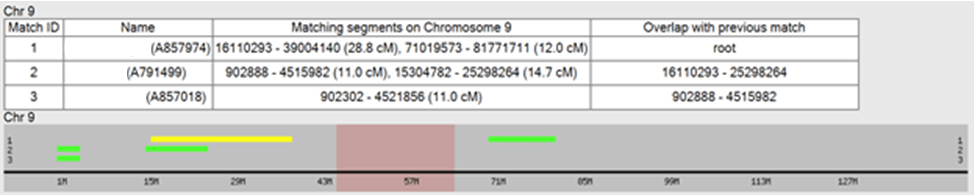
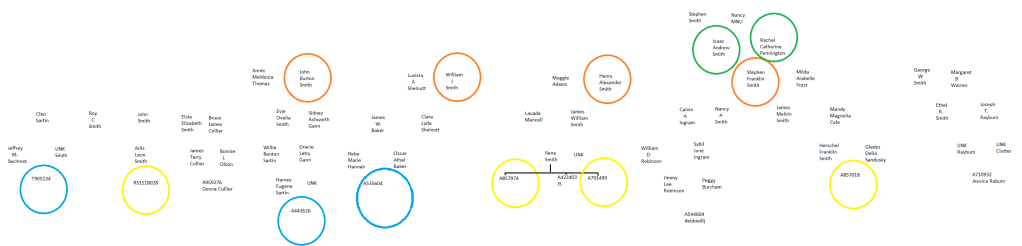
It is good that we see A535604 (descendant of William J Smith), A857974, and A791499 (descendant of Henry Alexander Smith) and T905134, A443626 (descendant of John Burton Smith) in this list. This shows that this DNA is closely linked to Isaac Andrew Smith or Rachel Catherine Pennington. For notes, A443626 is both a documented descendant of Josiah and Elizabeth as well as Stephen Smith and Nancy (Harris?) Rainwater of Blount Co, AL. This Stephen Smith line is yDNA established.
Click to see the larger tree:
This will not share well due to compression, but this is the larger tree I’m working with
Available GEDcoms for the above list are:
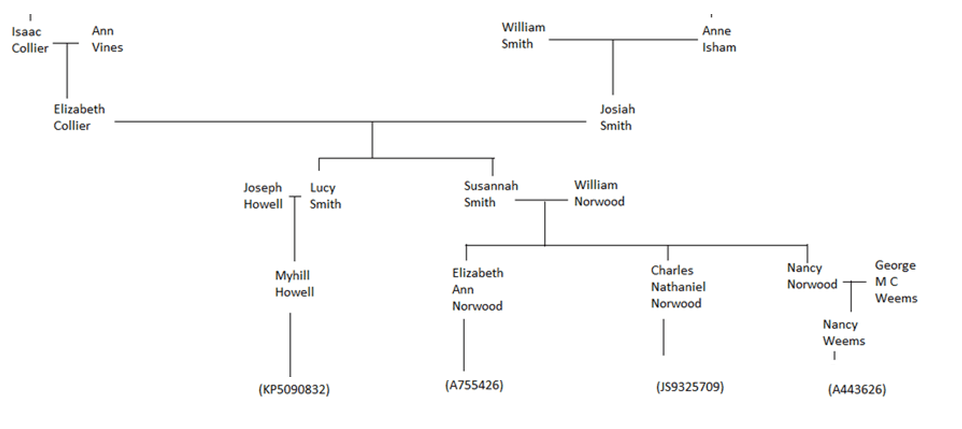
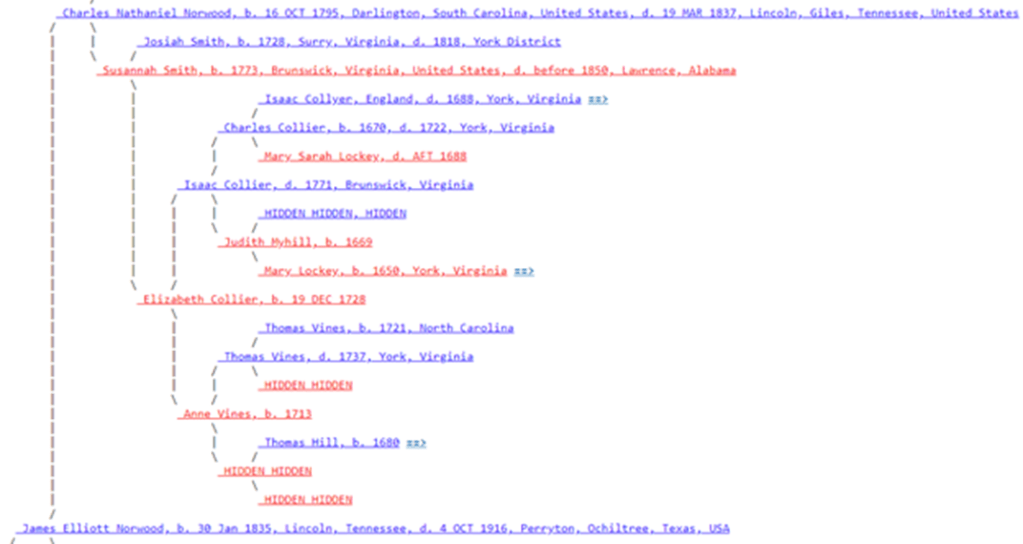
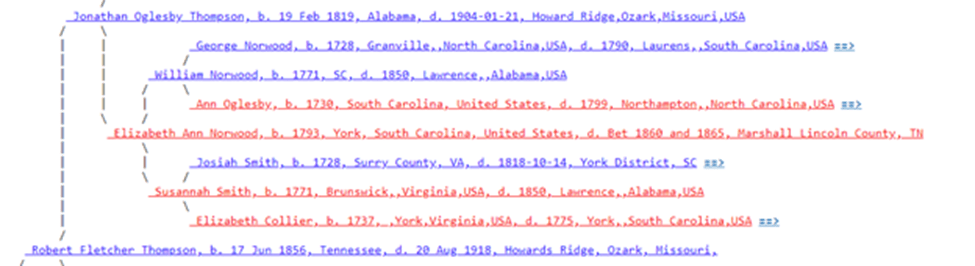
Their paper trail shows that they are both descendants of Josiah Smith and Elizabeth Collier.
From JS9325709 tree:
From A755426 tree:
We can see that their MRCAs are William Norwood and Susannah Smith, a daughter of Josiah and Elizabeth.
To further see how significant this finding is, here is the 2D autosomal DNA browser view of a yDNA match of mine who descends from Stephen and Nancy Smith compared to Carlton Smith (another yDNA carrier descended from Stephen):
It is very clear to see here that JS9325709 and A755426 share two halves of a segment that is was present in the common ancestors of RS1118028 , A535604, and A857018.
Conclusion
I believe the above information does two things. First, it uses autosomal DNA information to confirm the hypothesis (which was built from will information) that Miles Smith was a descendant of Josiah Smith. Second, it autosomally links descendants of Josiah to descendants of Stephen Smith of Blount Co, AL. This Stephen Smith line is a 67 level match to my Smith line.
We can therefore now build a hypothesis that Josiah Smith was likely a carrier of my Smith group’s yDNA.
A preliminary autosomal investigation into this hypothesis has yielded this:
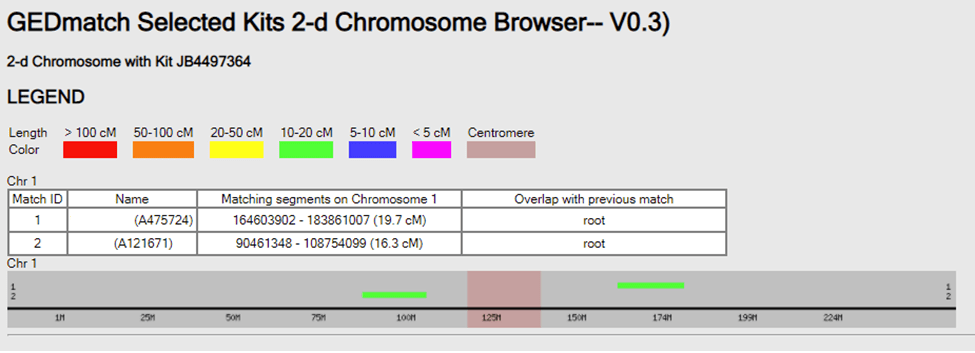
JB4497364 and A475724 match JB4497364 on the same chromosome, Cr1. It should be clarified that this is significant because John and Ray descend from very distantly related but yDNA matched Smith lines.
Further, the segment from 164.6M to 183.8M has been used to identify other autosomal DNA matches of JB4497364 and A475724 who are descendants of Isaac Smith of Camden, Benton Co, TN (descendant of Shadrack Smith of Wake Co, NC). We therefore consider this a region of interest when looking for possible common Smith ancestries between autosomal matches.
We can further hypothesize that it is a strong likelihood that this autosomal DNA on Cr1 was inherited via common Smith ancestry shared by the involved autosomal matches. Further, because autosomal DNA does not jump around in location on a chromosome, nor does it change chromosomes, we can hypothesize that the segment from 90.4M to 108.7M may be relevant to a common Smith ancestry shared by L.B., JB4497364 and A475724 as the neighboring segment to the right can be demonstrated to be relevant to that ancestry. A larger, more complete segment in their hypothetical common ancestor would bridge the two segments into one.
Ideally, we would like to try to confirm these hypotheses with a yDNA test for a proven and unambiguous descendant of Josiah Smith’s.
I will also note that it is likely not a coincidence that we find one of Josiah’s brothers, Cuthbert Smith, in the story of Henry Smith of Knox and Harlan Co, KY who knew Col. Elisha Smith of Mt. Vernon, Rockcastle Co, KY. Elisha lived very near Ray Smith’s ancestor, Isaac Smith who married Nancy Hendricks. (Isaac was a son of an Andrew Smith who was a son of Robert Smith of St. Matthew’s Parish in old Orange Co, NC).
Cuthbert had a son Stephen Smith (different from Blount Co, AL Stephen) who married an Olive Harrison. Olive Harrison was a daughter of Olive Smith and Nathaniel Harrison. Olive Smith was a daughter of Eads Smith. Eads had another daughter Mary Smith who married Andrew Jeter. Henry Smith enlisted under Andrew Jeter in the Revolutionary War. This was in Fountains Creek, VA.
I hope this is useful to someone. It has taken many years to get this far and sort out all of the poorly vetted research that has been published thus far.
I have recently noticed that I appear to be receiving some blog views from folks accessing a link in Google Groups. I do appreciate having my work shared and I wish to state that I would be happy to discuss my research with you. Unfortunately, I do not know to which Google Group my blog has been shared. If you have found your way to my blog from Google Groups, please feel free to leave a comment and let me know how you found my page. I’m interested to learn about the interests of my readers.
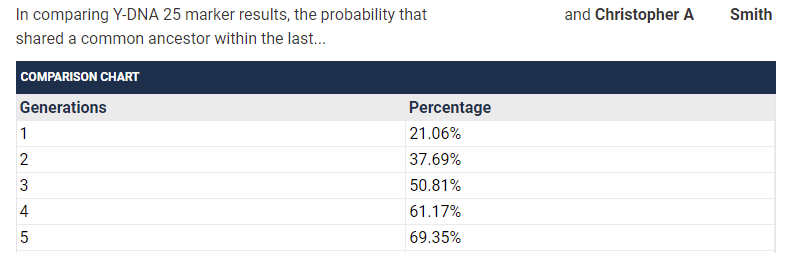
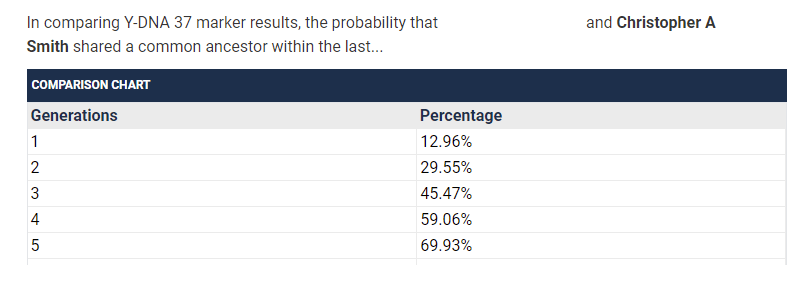
So I have a large number of 12/12 yDNA matches, 68 to be precise.
Let’s look at what a few different places say about the significance of these matches.
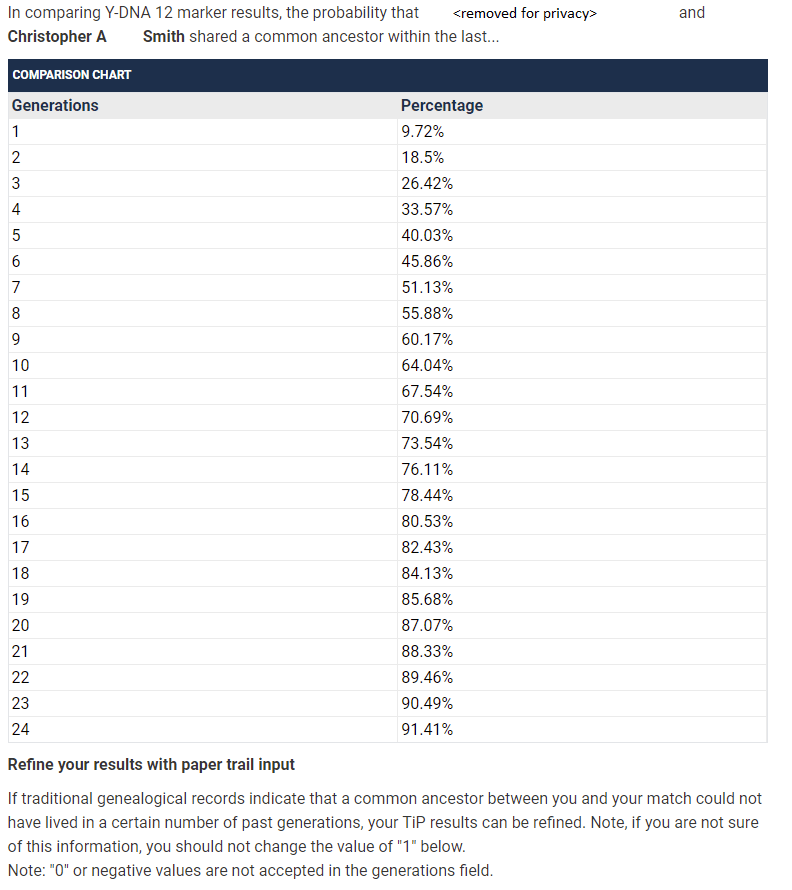
FamilyTreeDNA has the TiP Report calculator.
Interestingly, despite the following posting on FTDNA’s official FAQ pages, I’m still given the option to adjust the number of generations for 12/12 matches:
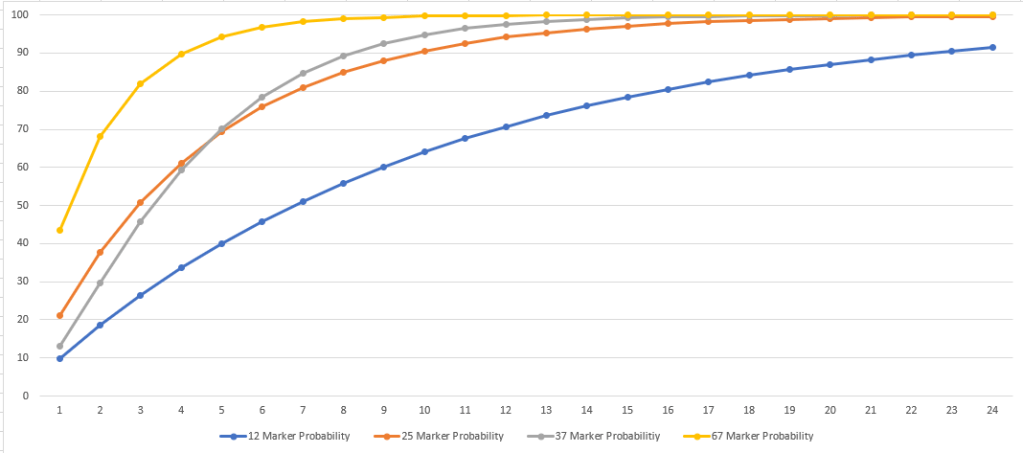
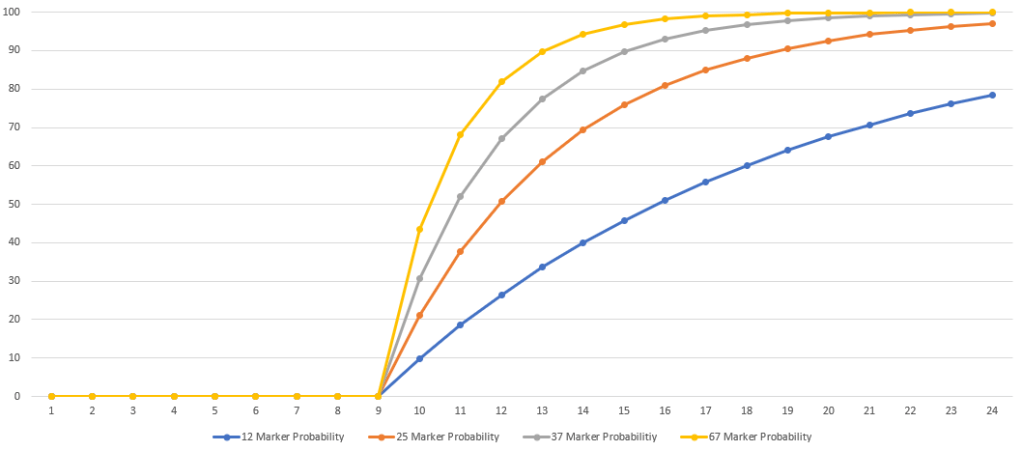
Using the default values, this curve appears like this: I’ve added 25, 37, and 67 level matches as well.
I find it interesting that the numbers suggest that a 37/37 match has a lower probability of having an MRCA within 1-4 generations than a 25/25 match does. I double checked the number the TiP Calculator was giving me to be sure this wasn’t some error I introduced.
There is a field that can be adjusted if it is known that you and a match do not share a common ancestor in a number of generations. However, I’m inferring from the above FAQ note that this shouldn’t be done for yDNA matches who are of a genetic distance of 0?
These numbers begin to look very different.
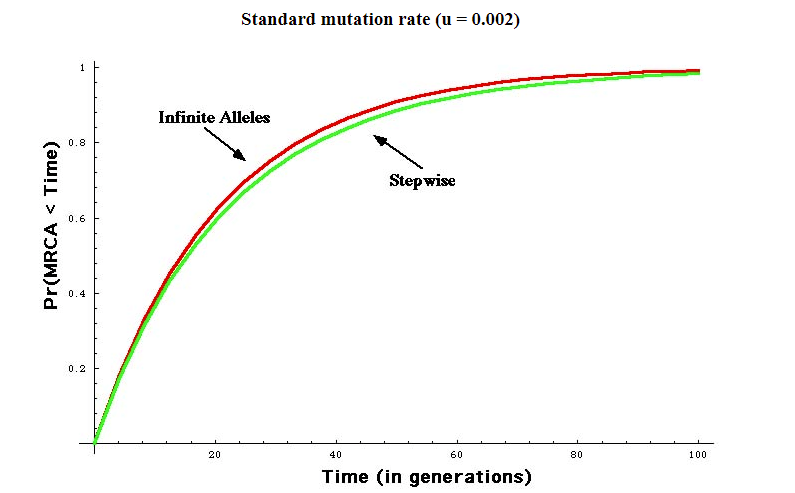
But this is only FTDNA’s take on TMRCA estimates based on yDNA matching, limited to 24 generations. Let’s look at another source:
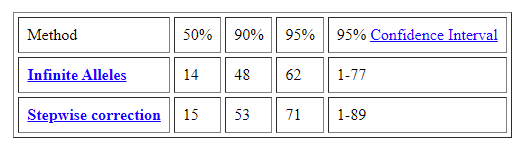
In looking at the above page, we find the following graph and table:
Method: B. Walsh, 2001. Estimating the time to the MRCA for the Y chromosome or mtDNA for a pair of individuals, Genetics 158: 897–912
Both methods using Standard Mutation Rate:
So this suggests that we enter the 90% confidence interval with a standard (slower?) mutation rate at around 48-53 generations, depending on which calculation model is used.
48 generations is, assuming around 25 years per generation, about 1200 years ago.
53 generations is, assuming around 25 years per generation, about 1325 years ago.
For folks with deep ancestry in England and that neighborhood, this could place, with 90% confidence, their TMRCA with a 12/12 yDNA match at around 300 years before the Norman Conquest, a time well before surnames were in use.
However, I want to show how even these estimates can be misleading.
One of my 63/67 yDNA matches, who has a close cousin who is a 67/67 yDNA match to myself, has done Y Haplogroup and BigY testing at FTDNA. They are shown to be R-DF41. I did an autosomal DNA test with 23andMe and they report my yDNA haplogroup as R-CTS2501. These values are synonymous.
According to yFull.com, R-DF41 aka R-CTS2501 emerged around 4100 years before present (ybp).
What this means is that, if only comparing yDNA haplogroups, if two men match, it can be said they have a TMRCA of around 4100 years ago, using R-DF41 as an example. While not super useful in and of itself, haplogroup matching can be useful for identifying potential yDNA testing candidates. People who autosomally match, are of the same yDNA haplogroup, and also share a surname or a common paper trail narrative make good candidates for further, more precise, 67 level STR testing and comparison.
R-CTS2501 is a subgroup of R-DF13, R-L21, R-S461, R-P312, R-L151, R-PF6538, R-L52, R-L51, R-L23, R-M269
I see one of my 12/12 matches is listed on FTDNA as R-L2. Let’s see where that fits in.
R-L2 is a subgroup of R-U152, R-P312, R-L151, R-PF6538, R-L52, R-L51, R-L23, R-M269
So based on this information that we are both part of R-P312, we can see that our TMRCA is actually waaay back at around 4,800 ybp. Assuming 25 years per generation, is it around 192 generations.
It appears that at least 4 of my 12/12 yDNA matches who are not Smiths are linked to R-P312. The remainder are generically R-M269.
I have also uploaded autosomal DNA kits for 67/67 yDNA matches who have not done yDNA haplogroup testing (and who also do not share any significant amount of autosomal DNA with myself) to the Morely yDNA Haplogroup/Subclade Predictor and found their results to match exactly the above information from FTDNA and 23andMe.











 Tracing my Smiths - by Christopher A. Smith - © 2021
