For this post, I can give you the tl;dr here in the foreword. Back in 2009 my Smith line was yDNA matched to the Butler line of the Earls of Carrick in the Peerage of Ireland.

This Butler line carries the modern variant of the yDNA of Rollo and they have the paper trail and other provenance to support this, including autosomal DNA matching (which, for privacy reasons, has not been published) that supports their paper trail pedigree. Before his passing, I communicated, however infrequently, with my match via e-mail for a number of years, and later with his sons. His family has granted me written permission to discuss their larger Butler family story within the context of my research.
This Butler line is patrilineally descended from Hervey Walteri, the progenitor of the Butler Dynasty and a patrilineal descendant of the original Dukes of Normandy. They are agnates of William the Conqueror, Henry I, and William Adelin who died as a result of The White Ship Disaster.
Most notably, the pedigree for my group’s match has been publicly published by Prince William, Duke of Cambridge and this family tree information is managed, online, by a documented cousin family of my match’s family.
I’m wanting to avoid a big build up of drama or suspense in the release of this information, that the yDNA of Rollo has been partially sequenced, because there are other items that I wish to address.
First, I believe the 12 marker sequence and values are Intellectual Property of FamilyTreeDNA. That said, I can not wholly approve of how FTDNA manages their public volunteer led projects. They get a strong 5/10 from me in this regard. I do find, however, that their yDNA testing is the most precise among the available genetic genealogy companies.
Second, I believe I may be the first to accurately publish on this subject. Please use what information I provide here respectfully, responsibly, and honestly.
Currently published research
There appear to be many online discussion groups that have explored this subject of the yDNA of the original Dukes of Normandy and I wish to present my information here, on my public blog, so that these groups can correct or refine what they have publicly published. At the very least, I hope I may elicit the finale of the seemingly endless speculation on this topic that is abundant on the internet.
For notes, none of the following projects, researchers, or groups have ever contacted myself nor my yDNA match (to my knowledge) for information pertaining to their research.
It should be very clearly understood that I, Christopher Smith, the author of this blog, do not necessarily support or echo any of the published statements or conclusions found in the following publications. I present them at face value, as sites that have engaged in some form of research pertaining to the yDNA of the House of Normandy, as it pertains to the original Dukes of Normandy.
Further, this is not a comprehensive list and I will add to it as I refine my Google search results.
International research efforts
I have a deep love and respect for academia and credible educators. I would have loved to have been a part of the following research effort. This first article was the most credible effort that I came across to really study the question of the yDNA of Rollo. It is the most interesting as it involved an inter-governmental and collaborative academic research effort between France, Norway, and Denmark.

I will note that this research effort was ultimately ruled fruitless due to 1) the age of the bones identified in the sarcophagi and 2) the amount of lead said sarcophagi contained. No useable DNA was recovered from these efforts and, after the bones were examined, it was determined that there was very little likelihood that they belonged to kinsmen of Rollo.
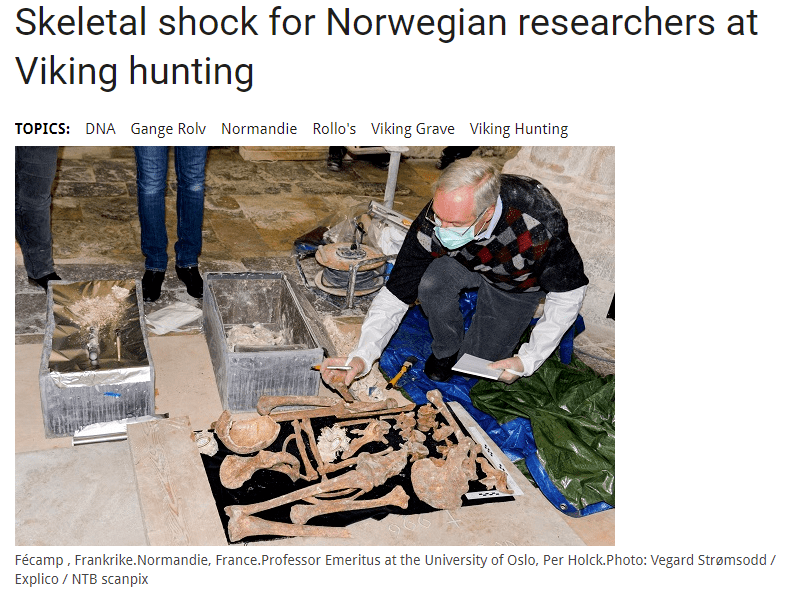
Further, I have identified the following projects as having published possibly incorrect or misleading information about the yDNA of the House of Normandy, specifically that of Rollo’s and the Dukes’. This story was re-posted on a number of sites/blogs and, for tidiness, I will not repeat them here.
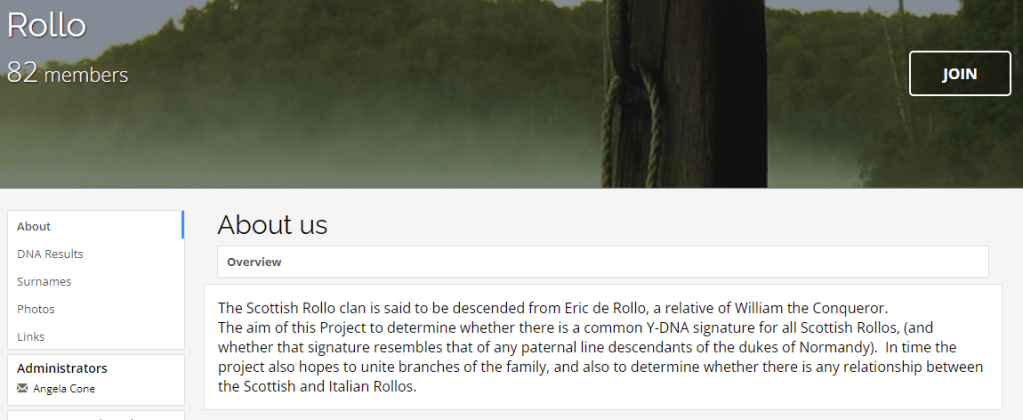
Group “Rollo” at FamilyTreeDNA
The St. John Genealogy Project
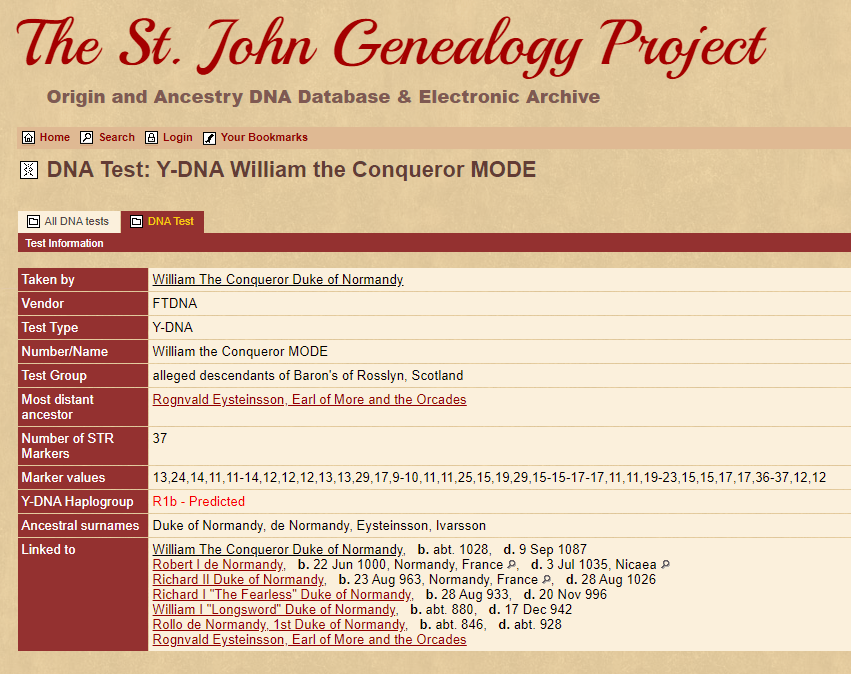
For this St. John Genealogy page, I can assure them that they have the yDNA marker values wrong.
They are: 13 24 15 11 11 14 12 12 11 13 13 28. These are the 12 markers of my Smith group, the same ones that match my Smith line to the Butlers.
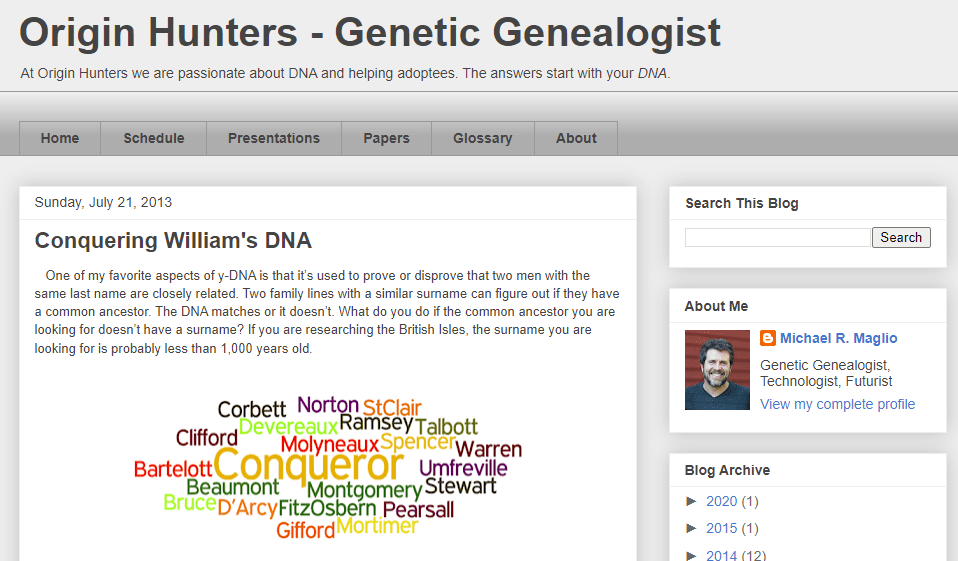
Origin Hunters
The King’s Son
It must be made very clear that I have not evaluated the claims of this site’s author and do not wish to discuss the subject matter they have published outside of the scope of the yDNA of the House of Normandy. I also am not wishing to advertise for or support the services they offer. We have no affiliation.
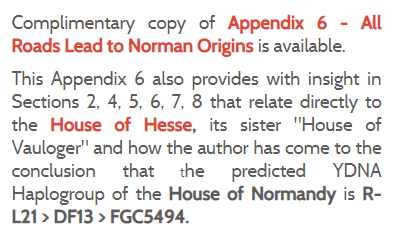
https://the-kings-son.com/royal_haplogroups/royal_normandy_house
I believe I must disagree with their findings that the yDNA of the House of Normandy was, in modern terms, FGC5494. That said, I do believe they are the closest yet to accurately identifying the yDNA branch of the larger yDNA haplogroup tree (a subclade of DF13).
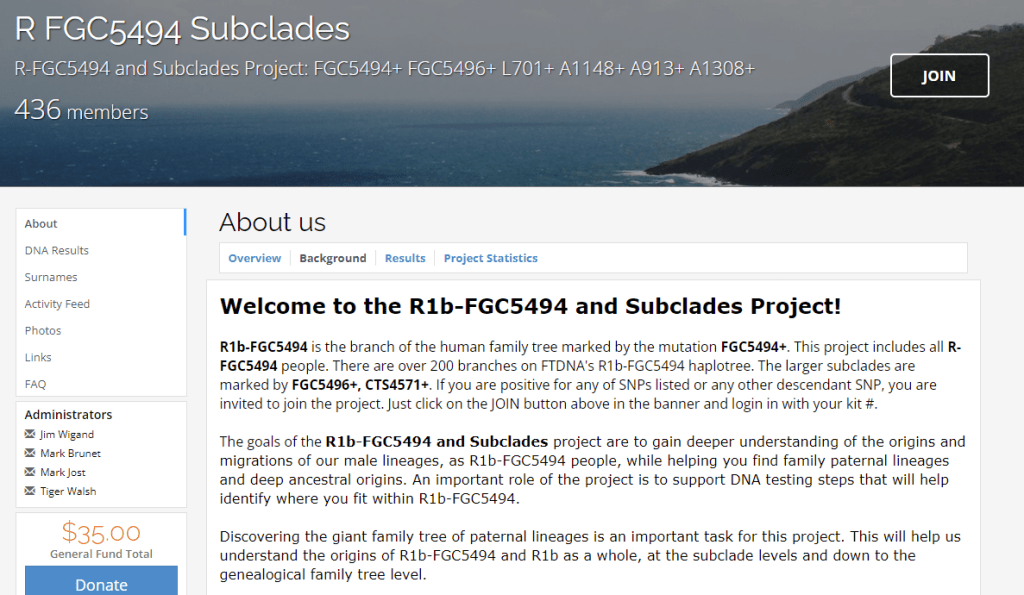
I will cite my own yDNA information and research as evidence. I am open to critique and peer review. From my group’s WikiTree project page:
Our Smith group is proven to be R-CTS2501 (aka but != R-DF41) a subgroup of R-DF13, R-L21, R-S461, R-P312, R-L151, R-PF6538, R-L52, R-L51, R-L23, R-M269. Further, BigY testing has grouped two of our autosomally distant Smith yDNA populations into R-FTB93197. This FTDNA specific haplogroup was created on 6 Sep 2015. To my knowledge, my blog and my group’s WikiTree project are the only online sources that properly and thoroughly explore from where this yDNA haplogroup originates.
Smiths, Butlers, and the Dukes
If you’ve made it this far, you probably have a lot of questions, and I appreciate that. I will direct you again to my Smith group’s Wikitree project page. Most of what you will be asking will be addressed there. You will also likely benefit from a reading of Countering “The Great Carrington Imposture” (as well as other postings in this blog which you are currently reading). Admittedly I have not thoroughly completed my analysis and critique of Round’s efforts as I was at the limit of my understanding of the subject matter when I completed the first part, and quality sources for much of the older subject matter is outside of my reach. I have since spent the majority of my time exploring why, when my family had never had stories of such things passed down, our Smith yDNA is being linked to the House of Normandy.
My uncle once told me of a short conversation he had with my grandfather. He said he had asked him “Who were the old Smiths?” to which my grandfather answered “Why should it matter?”. I very much agree with this sentiment, but also believe that if one has the ability to preserve history, real history, one is obligated to do so. I am likely the first of my family (immediate or otherwise) with the technical and academic skills and resources (time, namely) to properly explore our earlier American story (I will later post about a research effort by my cousins in Indiana). I was not expecting to be able to find English origins for our Smiths, but it is something I felt I have had to stringently explore, with discipline, since the information has placed itself in my lap.
The current hypothesis is that my group’s Smith line is descended from the Smiths of Blackmore (Essex, England) who settled along the south bank of the James River in Virginia in the 1620’s. (To sort out a lot of the confusion about this Smith family, please read this WikiTree Project page.) These Smith men were patrilineal descendants of the Smiths of Rivenhall (Essex, England) and they, in turn, were patrilineal descendants of John Carrington, Esq. of Chester who in 1403 changed his name to John Smith, Esq. as a result of his involvement in the Epiphany Rising Plot against Henry IV.
The Carringtons of Chester, as it is well documented (despite Round’s objections) were said to have been patrilineal descendants of Sir Michael of Carrington in Chester (Cheshire). Sir Michael’s paper trail traces his male line lineage back to an Adae of Carrington, heir to a Hamo of Carrington who, according to M. Lionel Angus Butterworth, was a kinsman to William the Conqueror. Hamo was said to have been a son of a Marquis of Carentan in Normandy, France.
Note: This evening, 6/8/22 at around 11:30PM ET, I found this blurb in “The Carrington Imposture” by John Horace Round (Peerage and Pedigree, Vol II, pg. 157):
“We read further, under Adam de Carington, that The Manor of Carington being only four miles from Warrington, tradition favours the belief that Hubert Walter recommended Michael de Carington to the notice of the lion-hearted Richard, which led to his appointment as Standard Bearer to the King.”
I believe Round is citing Dr. Copinger, but from where Copinger gets his information, I do not know.
There is also a socio-political affinity between the Smiths, Carringtons, and Butlers that can be found among the records of the family of George Booth who married Jane Carrington, last heir to the Carrington estate. It can be demonstrated through documented marriages and legal cases that all of these families intermarried.
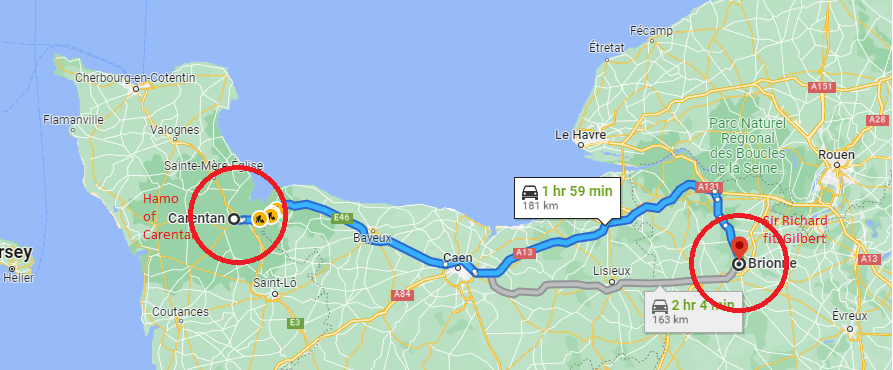
For reference, here are the ancestral homes of Hamo of Carentan and the Butlers.
Closing
There is A LOT of information that has been published online about these families and lineages, and the quality of the content of many of these earlier authors, even those of the late 20th century, leaves much to be desired. However, I believe this current blog posting is the first to accurately identify yDNA of the male line of original Dukes of Normandy.
Thank you for your time.


 Tracing my Smiths - by Christopher A. Smith - © 2021